TL;DR: Scalable underwriting software automates loan, mortgage, and insurance underwriting as volumes grow. Best for document-heavy underwriting: Kolena; best for bank statement analysis: Ocrolus; best for custom credit models: Zest AI; best for real-time decisioning: Provenir.
What Is Scalable Underwriting Software?
Scalable AI lease abstraction providers use artificial intelligence to read, interpret, and digitize complex legal lease documents. This technology extracts crucial clauses, dates, and costs, automatically structuring them into digital formats or software platforms. It reduces manual data entry time by up to 80%.
Scalable underwriting platforms are built to handle a growing volume of applications without performance bottlenecks or manual intervention. They use modular architectures, cloud-based infrastructure, and flexible workflows to ensure that the system can adapt to changes in business requirements or regulatory environments with minimal disruption.
This is part of a series of articles about loan processing
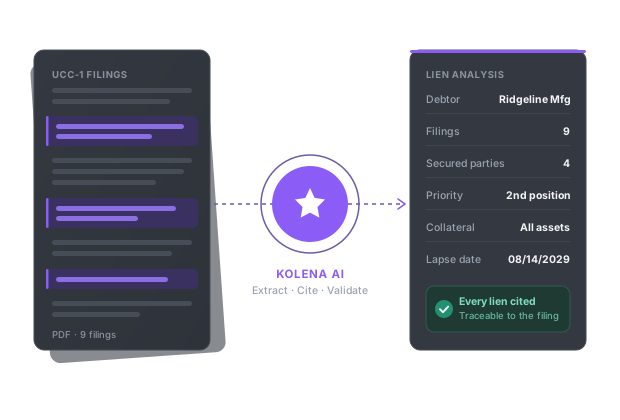
Analyze your first UCC filing in minutes with AI
Why Is Scalability Important in Underwriting Software?
Scalable underwriting software helps organizations manage increasing application volumes without sacrificing speed, accuracy, or compliance. By automating routine tasks and providing flexibility to grow with business needs, these platforms improve operational efficiency while supporting consistent underwriting decisions.
Handles growing application volumes: Processes increasing numbers of loan or insurance applications without requiring proportional increases in underwriting staff or infrastructure.
Maintains consistent decision quality: Applies the same underwriting rules and risk models across all applications, reducing variability and human error as workloads increase.
Reduces processing bottlenecks: Automates repetitive tasks such as data collection, document validation, and eligibility checks to keep applications moving during peak demand.
Supports business expansion: Makes it easier to launch new products, enter new markets, or onboard additional customers without redesigning underwriting workflows.
Improves operational efficiency: Eliminates manual handoffs and repetitive reviews, allowing underwriters to focus on complex or high-risk cases that require expert judgment.
Adapts to changing requirements: Allows organizations to update underwriting rules, workflows, and compliance policies without disrupting day-to-day operations.
Supports faster turnaround times: Maintains quick underwriting decisions even during periods of high application volume, improving customer response times.
Related content: For a closer look at the tools behind these decisions, see our guide to loan underwriting software.
Scalable Underwriting Software at a Glance
The table below summarizes the key differences between the tools covered in this article. We explore each of them in more detail in the sections that follow.
Category | Solution | Best For | Key Strengths | Things to Consider |
AI-Powered Underwriting Automation | Kolena | Automating loan and UCC document review | Document extraction, validation, and cross-referencing with audit trails | Handles document work; the credit decision stays with underwriters |
AI-Powered Underwriting Automation | Ocrolus | Bank statement, pay stub, and tax form analysis | High-accuracy document capture with fraud detection | Centered on lending-document analysis, not broad workflow automation |
AI-Powered Underwriting Automation | Zest AI | Automating consumer credit decisions | Client-tailored risk models with fairness controls | Focused on credit decisioning, not document or origination workflow |
AI-Powered Underwriting Automation | Provenir | Real-time credit risk and fraud decisioning | Low-code decisioning with integrated data and case management | Broad platform; underwriting is one of several use cases |
Loan Origination & Underwriting Platforms | TurnKey Lender | Consumer and commercial credit decisioning | Configurable AI risk scoring with stop rules | Packaged platform; deep customization can need development |
Loan Origination & Underwriting Platforms | nCino | Modernizing commercial loan origination | End-to-end origination, underwriting, and portfolio management | Built on Salesforce; cost and customization depend on it |
Loan Origination & Underwriting Platforms | Abrigo | Community banks originating multiple loan types | Unified origination with credit spreading and risk rating | Feature depth brings a learning curve |
Loan Origination & Underwriting Platforms | MeridianLink | Multi-product consumer and mortgage lending | Configurable decisioning with a large integration network | Deeper configuration often routes through vendor services |
Key Features of Scalable Underwriting Software
Configurable Underwriting Rules Engine
A configurable underwriting rules engine is central to scalable underwriting software. It allows organizations to define, modify, and deploy underwriting criteria without extensive coding or IT involvement. Business users can create rules based on risk appetite, regulatory requirements, or product guidelines, so the software remains aligned with organizational needs. This flexibility is important for responding to changing market conditions or new regulations.
By centralizing rule management, the engine ensures consistency in decision-making across applications. It also supports the simulation and testing of new rules before deployment, reducing operational risks. The ability to update rules dynamically allows organizations to refine underwriting processes for efficiency and accuracy while supporting growth and compliance.
Automated Document Collection and Processing
Automated document collection and processing streamline one of the most time-consuming aspects of underwriting. The software can request, receive, and validate applicant documents through secure digital channels. It checks for completeness, flags missing items, and can send automated reminders to applicants, reducing manual follow-up by staff. This reduces delays and helps applications move through the pipeline.
Once documents are collected, the system processes them using predefined workflows and validation checks. Optical character recognition (OCR) and AI-driven parsing extract relevant data, which is then verified against application requirements. This automation reduces manual data entry, lowers errors, and speeds decision timelines, allowing underwriters to focus on exceptions and complex cases.
AI-Powered Data Extraction
AI-powered data extraction increases the speed and accuracy of underwriting. Using machine learning algorithms, the software identifies, extracts, and categorizes information from document formats, including scanned images, PDFs, and digital forms. This removes the need for manual data entry and reduces errors.
The system learns from new data and feedback, improving extraction accuracy over time. By integrating with other data sources, it cross-checks information and flags discrepancies for review. This helps ensure underwriting decisions are based on reliable data and supports risk assessment and compliance requirements.
Related content: Read our article about the loan tape and the key fields AI helps extract.
Real-Time Risk Scoring
Real-time risk scoring allows underwriters to evaluate applications based on current information. The software pulls data from internal and external sources, applies risk models, and generates a score reflecting the applicant’s risk profile. This supports faster decision-making and reduces manual review of low-risk cases.
The risk scoring engine can be configured to reflect organizational policies and adapt to new risk factors. It tracks performance metrics and outcomes to refine models over time. Real-time scoring also supports regulatory compliance by providing a clear audit trail for each decision.
Straight-Through Processing
Straight-through processing (STP) allows applications to move from submission to decision without manual intervention. By automating data collection, validation, risk scoring, and decisioning, the software processes routine, low-risk applications quickly and consistently. This reduces bottlenecks and helps organizations handle large volumes of applications.
STP is valuable for high-volume products or channels, such as online lending or digital insurance. It provides instant decisions and reduces operational costs by minimizing manual work. Exceptions or complex cases are routed to human underwriters, so attention is focused where it is most needed.
Workflow Automation and Case Management
Workflow automation coordinates the application process, from intake to final decision. Predefined workflows guide each application through required steps, assign tasks to team members, and monitor progress. This helps ensure service level agreements (SLAs) are met.
Integrated case management tools provide visibility into each application’s status and support collaboration and escalation. Automated notifications, task assignments, and audit trails improve communication and compliance. Together, workflow automation and case management reduce turnaround times and increase accountability throughout underwriting.
API and Third-Party Data Integrations
APIs and third-party data integrations enable connectivity with external data sources, partners, and core systems. Through standardized interfaces, the software retrieves credit reports, identity verification data, property records, and other information. This reduces manual data collection and improves decision accuracy.
Flexible integration capabilities allow organizations to adapt to new partners or regulatory requirements. They can add or swap data providers without significant system changes. API frameworks also support ecosystem expansion, such as integrating with CRM systems, analytics platforms, or customer portals, allowing the underwriting process to be embedded within broader digital workflows.
Notable Underwriting Automation Software with High Scalability
How we selected these tools: We shortlisted scalable underwriting software based on automated decisioning, document processing, configurable rules, system integrations, and the ability to handle growing application volumes without added staff.
AI-Powered Underwriting Automation
1. Kolena
Best for: Banks and lenders automating loan and UCC document review.
Strengths: Document extraction, validation, and cross-referencing with audit trails.
Things to consider: Handles document work; the credit decision stays with underwriters.
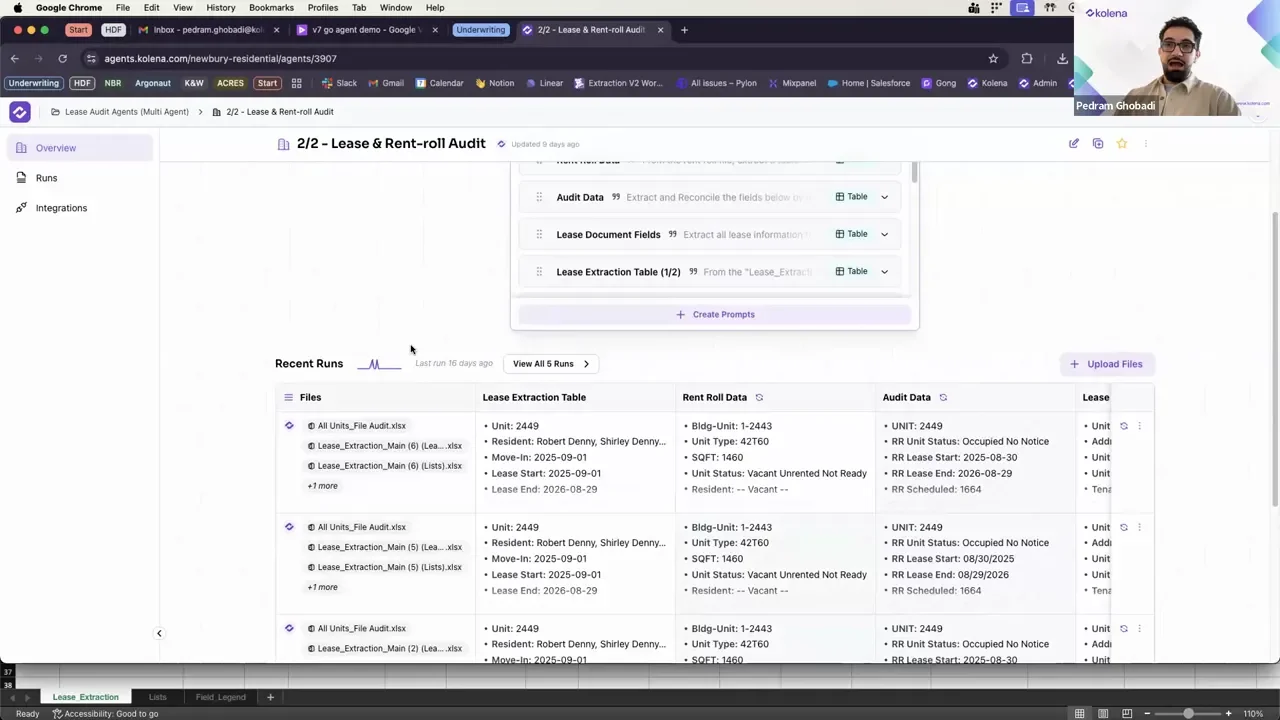
Kolena is an AI platform that automates document-heavy workflows for lending and credit teams. It extracts, validates, and cross-references collateral and payment data across UCC filings, loan packages, and lease documents. The platform includes prebuilt banking workflows and adapts to SBA, equipment finance, and conventional lending.
Its workflows cover UCC filing review, loan package validation, invoice and proof-of-payment checks, and compliance testing. Each transaction produces an audit trail and confidence scoring, and the platform is SOC 2 compliant. Teams can review dozens or hundreds of loans at once without adding staff.
Key features include:
UCC filing review: Extracts and verifies collateral details across UCC filings and lease documents.
Loan package validation: Reviews borrower documents and cross-references collateral and payment data during funding.
Invoice and proof-of-payment validation: Checks supporting documents as part of the funding process.
Compliance testing: Runs regulatory and consumer-protection checks across products, disclosures, and materials.
Audit trails and confidence scoring: Records a full audit trail and a confidence score for every transaction.
Prebuilt banking workflows: Deploys with ready-made workflows for SBA, equipment finance, and conventional lending.
Limitations (based on publicly available sources):
Setup effort: Configuring and training agents to match document and underwriting rules requires upfront work.
Unusual document formats: Documents with unusual formatting can require manual review.
Language coverage: Product support is currently centered on English-language documents.
Source: Kolena
2. Ocrolus

Best for: Lenders automating bank statement, pay stub, and tax form analysis.
Strengths: High-accuracy document capture with fraud detection.
Things to consider: Centered on lending-document analysis, not broad workflow automation.
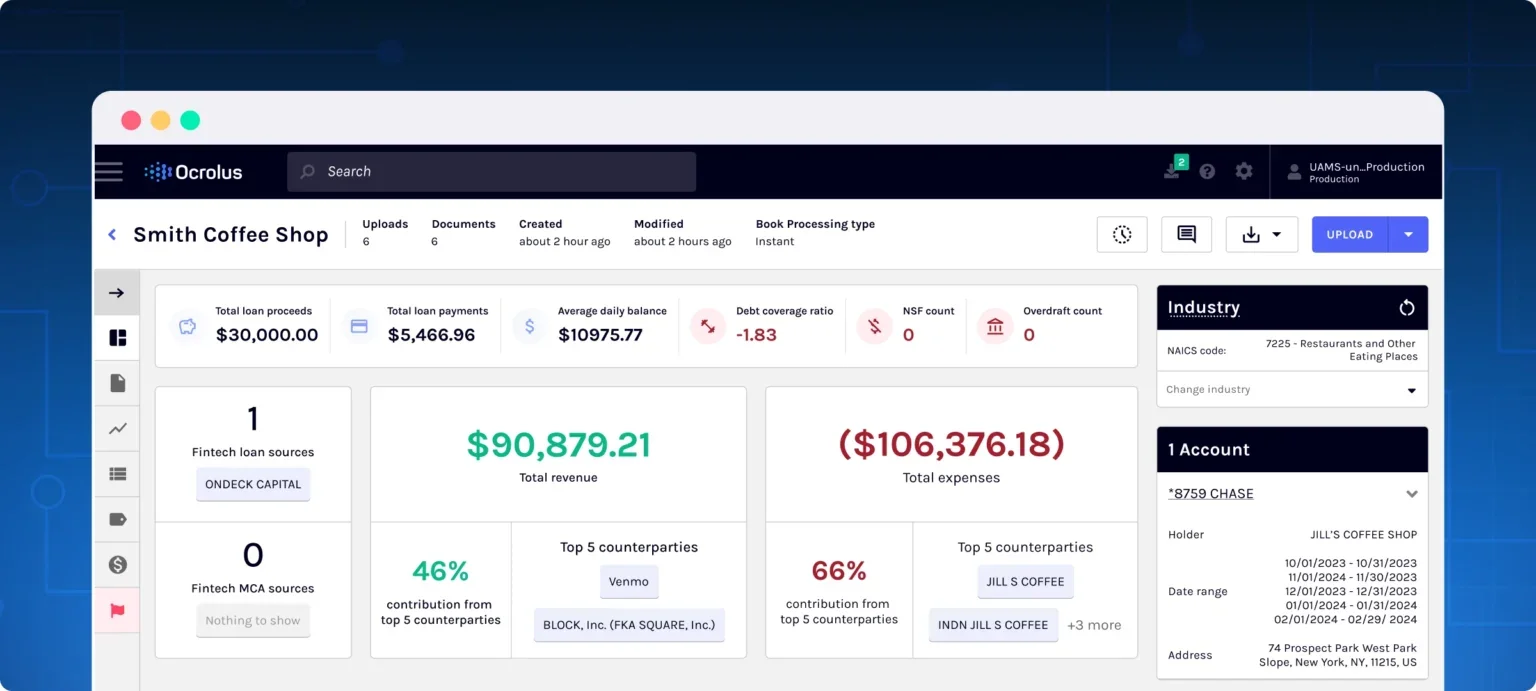
Ocrolus is an AI workflow and analytics platform for lenders that analyzes financial documents and returns structured data. It specializes in bank statements, pay stubs, and tax forms, and reports over 99% accuracy on document capture. Alongside extraction, it provides fraud detection that flags fake documents, data inconsistencies, and risk signals.
The platform is accessed through an API and a dashboard and integrates with loan origination systems. It offers vertical tooling for small business funding and mortgage, including cash flow analysis, income calculations, and condition clearing for underwriting.
Key features include:
Document understanding: Captures data from bank statements, pay stubs, and tax documents with reported accuracy above 99%.
Fraud detection: Identifies fake documents, data inconsistencies, and risk signals in submitted files.
Cash flow analysis: Measures revenue and debt capacity for small business funding decisions.
Income calculations: Evaluates income across borrower types for mortgage underwriting.
Inspect for underwriting: Automatically creates and clears conditions to move mortgage files through underwriting.
API and dashboard access: Delivers output into existing workflows and integrates with loan origination systems.
Limitations (as reported by users on G2):
Processing speed: Some reviewers report results can take up to a full business day and slow under heavy loads or at month-end.
False positives: A few users note that fraud detection can return false positives on certain suspicious-activity flags.
Reporting flexibility: Some reviewers find self-service reporting and export options limited for their workflows.
Source: Ocrolus
3. Zest AI
Best for: Lenders automating consumer credit decisions with custom models.
Strengths: Client-tailored risk models with fairness controls and monitoring.
Things to consider: Focused on credit decisioning, not document or origination workflow.
Zest AI provides AI-automated credit underwriting built on client-tailored machine learning models. It assesses applicants using more data points than generic scorecards and reports 2 to 4 times more accurate risk ranking. Its models are tuned for accuracy and fairness, using techniques such as LDA searches and adversarial debiasing.
The platform can auto-decision a large share of applications and integrates underwriting insights into existing lending systems with limited IT work. It serves institutions from large banks to credit unions, handling volumes from roughly 100 to over 600,000 applications a year, with ongoing model monitoring.
Key features include:
Custom risk models: Builds machine learning models tailored to each lender's borrowers and data.
Automated decisioning: Optimizes policies and cut-offs to auto-decision a large share of applications and reduce manual review.
Fairness controls: Applies bias-reducing methods, including LDA searches and adversarial debiasing, across underwriting.
Lending system integration: Feeds underwriting insights into existing systems with limited IT involvement.
Multi-product coverage: Supports auto, credit card, home equity, personal, and small business loan decisioning.
Model monitoring: Provides ongoing model monitoring and periodic business reviews.
Limitations (based on publicly available sources):
Implementation cycle: Standing up custom models runs through a proof-of-concept, refinement, and integration sequence over several weeks.
Data dependency: Tailored models rely on sufficient historical lending data for training.
Scope: The platform focuses on credit decisioning and fraud rather than document processing or full loan origination.
4. Provenir

Best for: Lenders automating real-time credit risk and fraud decisioning.
Strengths: Low-code decisioning with integrated data and case management.
Things to consider: Broad decisioning platform; underwriting is one of several use cases.
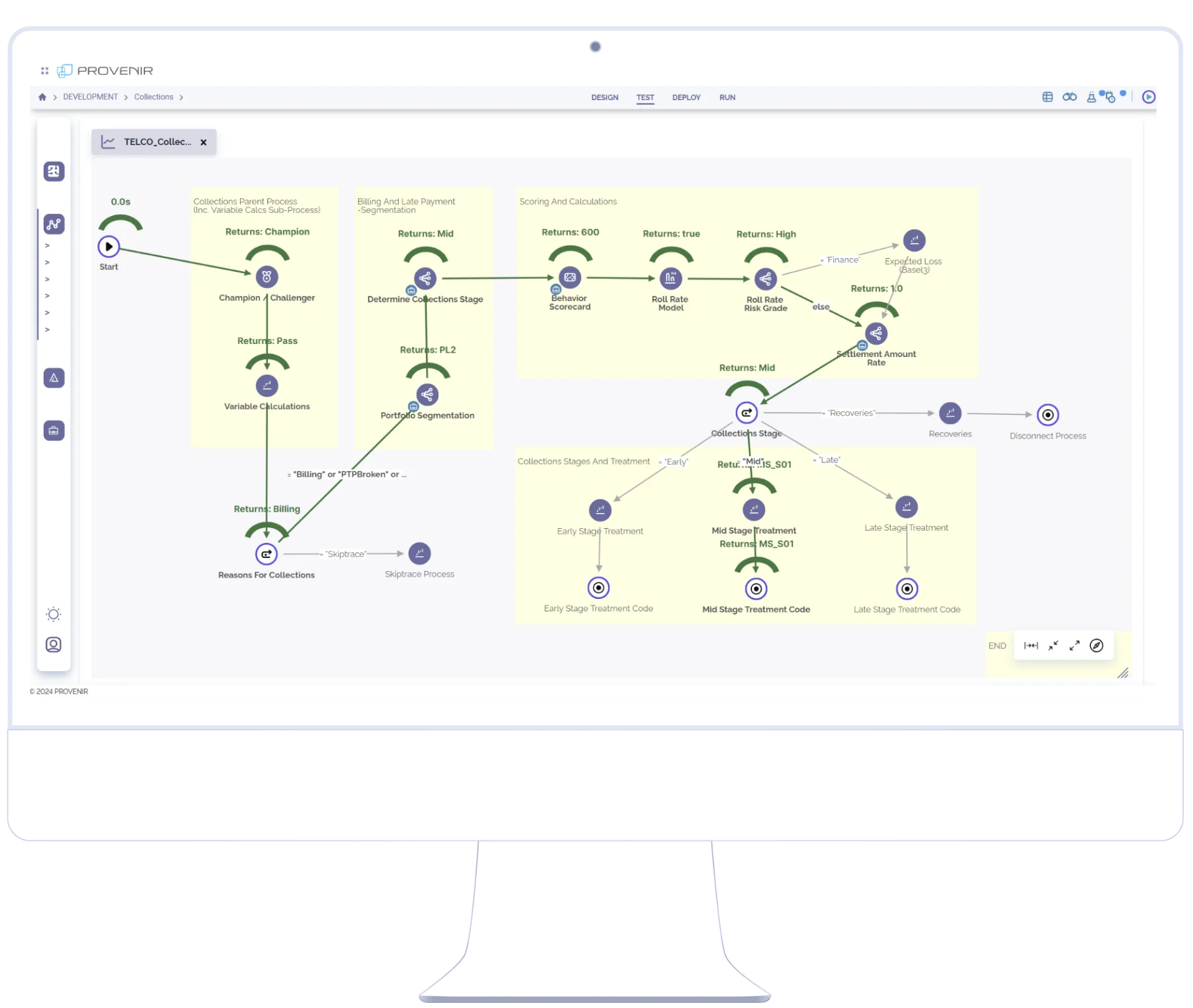
Provenir is a decision intelligence platform that consolidates data, AI models, analytics, and decisioning agents into one governed, cloud-native environment. Business teams configure, test, and deploy decision logic through a low-code interface, and every workflow is version-controlled and auditable.
It executes real-time decisions across credit risk, fraud, compliance, and customer management, and connects to more than 120 data partners through a single API. It integrates with existing core, CRM, bureau, and fraud systems through RESTful APIs, batch processing, and webhooks, and is ISO 27001 certified.
Key features include:
Low-code decisioning: Configures, tests, and deploys decision logic with version control and audit trails.
Data marketplace: Connects to 120+ credit bureau, alternative data, and fraud and identity partners through one API.
Decision intelligence: Monitors decision KPIs, generates strategy recommendations, and simulates changes against production data.
Case management: Creates cases from decisioning flows and manages referrals and fraud investigations with traceability.
Real-time and batch processing: Supports RESTful APIs for real-time decisions and batch processing for high volumes.
Integration framework: Works with existing core banking, CRM, bureau, and fraud systems without full replacement.
Limitations (as reported by users on G2):
Dated interface: Some reviewers describe the user interface as outdated.
Occasional bugs: A reviewer reported display issues such as oversized, clipped text in workflow node titles.
Mixed recommendations: One reviewer said they could not recommend the platform and suggested evaluating other options.
Source: Provenir
Loan Origination and Underwriting Platforms
5. TurnKey Lender

Best for: Lenders automating consumer and commercial credit decisioning.
Strengths: Configurable AI risk scoring with stop rules and reporting.
Things to consider: Packaged platform; deep customization can require additional development.
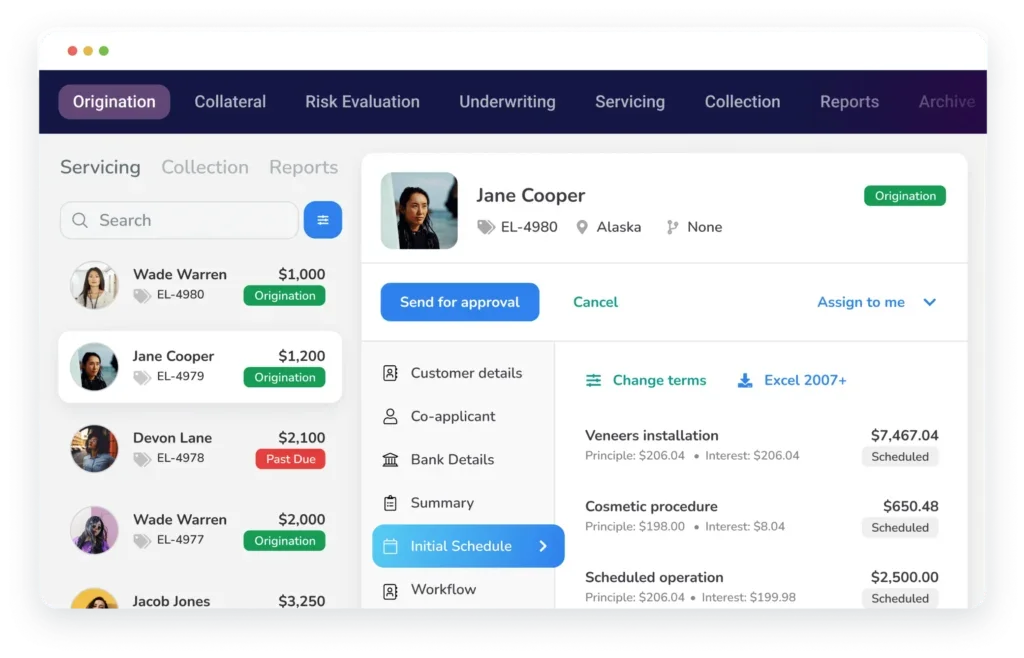
TurnKey Lender is a lending automation platform whose underwriting software applies AI-based risk scoring to traditional and alternative data. It analyzes a borrower's credit history, including payment history and outstanding debts, and generates scoring reports.
Decisioning rules are configurable, and a scorecard with stop rules can automatically reject low-quality applications. The platform includes document management, real-time portfolio monitoring and reporting, and integrates with existing systems. It is used for consumer and commercial lending across origination, underwriting, servicing, and collections.
Key features include:
Intelligent risk scoring: Uses traditional and alternative data to produce automated credit decisions.
Credit history analysis: Evaluates payment history, outstanding debts, and related borrower factors.
Configurable decisioning rules: Lets lenders tailor underwriting rules to their requirements.
Stop rules: Applies scorecard stop rules to automatically reject low-quality applications.
Document management: Uploads, stores, and provides access to borrower documents.
Monitoring and reporting: Provides real-time visibility into the loan portfolio.
Limitations (as reported by users on G2):
Performance: Some reviewers report the platform can run slowly at times.
Customization limits: Users note that non-standard changes to forms or workflows can require additional development.
Reporting: Several reviewers say reporting functionality could be improved.
Pricing: Some note setup fees and further enhancements can be costly.
Source: TurnKey Lender
6. nCino

Best for: Banks and credit unions modernizing commercial loan origination.
Strengths: End-to-end origination, underwriting, and portfolio management.
Things to consider: Built on Salesforce; cost and customization depend on that platform.
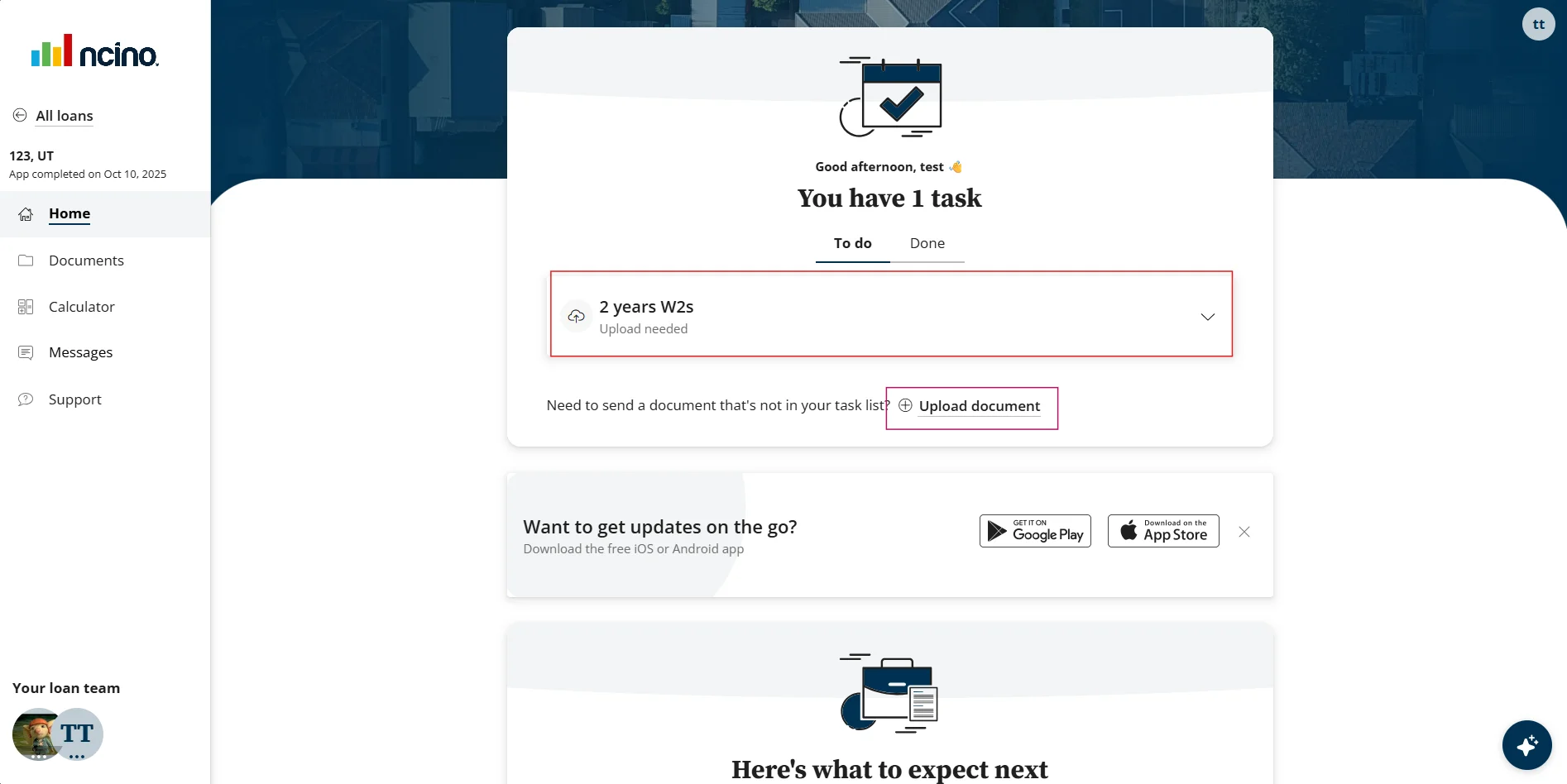
nCino provides a commercial loan origination system that manages origination, underwriting, and portfolio management on a single platform. It replaces siloed systems and connects front, middle, and back offices, and uses real-time reporting for portfolio management.
Preconfigured workflows onboard customers and automate pre-qualifications and credit approvals based on an institution's policy rules. The system can flag whether a loan should be auto-approved, declined, or routed for manual review, and includes an integrated document repository with a visual audit trail for compliance.
Key features include:
Commercial loan origination: Manages origination through underwriting and portfolio management in one system.
Workflow automation: Automates pre-qualifications and credit approvals against institution policy rules.
Automated spreading and credit analysis: Spreads financials and supports credit analysis within the origination workflow.
Continuous credit monitoring: Provides real-time monitoring across the credit lifecycle.
Deal management: Structures credit and non-credit deals with sub-loans, cloning, and bulk editing.
Compliance tooling: Maintains a document repository, covenant due-date notifications, and audit trails for regulators.
Limitations (as reported by users on G2):
Salesforce dependency: Reviewers note reliance on Salesforce adds cost and complexity, and customization often requires Salesforce expertise.
Implementation effort: Some users describe implementation as complex and requiring extensive customization.
Out-of-the-box limits: A few reviewers cite limited out-of-the-box configuration and request more enhancements.
Source: nCino
7. Abrigo
Best for: Community banks and credit unions originating multiple loan types.
Strengths: Unified origination with credit spreading and risk rating.
Things to consider: Feature depth brings a learning curve for new users.
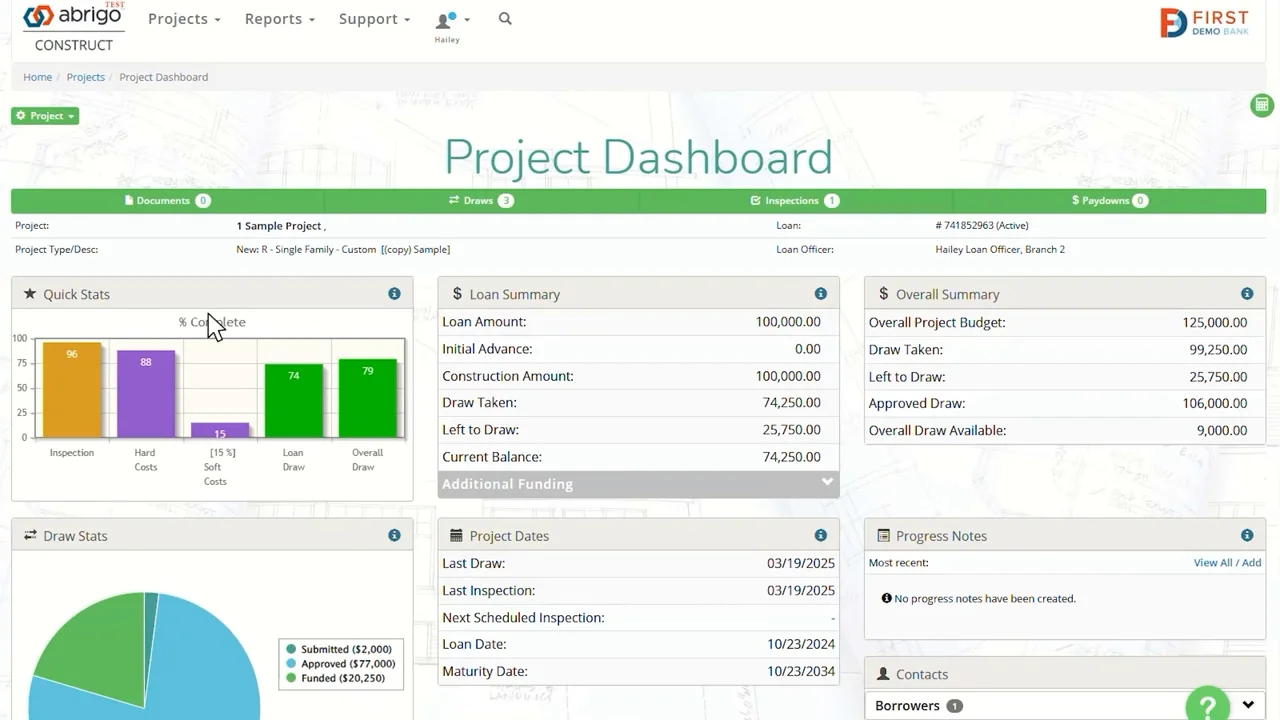
Abrigo provides loan origination and credit risk software for banks and credit unions, with a unified platform for originating commercial, consumer, construction, agriculture, and small business loans. It uses a single point of data entry, shared workflows, and notifications across the life of a loan.
The credit risk tools automate credit spreading, risk rating, and servicing, and support global cash flow analysis for spreading loans and calculating ratios. Its newer agentic capability, Abrigo APX for lending, uses AI agents to automate routine work and validate information within institution-specific governance.
Key features include:
Unified loan origination: Originates commercial, consumer, construction, agriculture, and small business loans in one platform.
Global cash flow analysis: Spreads loans and calculates ratios for complex borrowers.
Credit spreading and risk rating: Automates spreading, risk rating, and servicing across the loan lifecycle.
Single data entry: Enters borrower data once and reuses it through origination.
Agentic AI (Abrigo APX): Uses AI agents to automate routine tasks and validate information under institution governance.
Consistent documentation: Standardizes documentation and decisioning across the institution.
Limitations (as reported by users on G2):
Learning curve: Some reviewers say the range of options can be overwhelming at first.
Tax return reader: One reviewer notes the electronic tax return reader has limited functionality and spreading can be time-consuming.
Setup usability: A few users describe loan setup and configuration as less intuitive than expected.
Source: Abrigo
8. MeridianLink

Best for: Credit unions and banks running multi-product consumer lending.
Strengths: Configurable decisioning with a large integration network.
Things to consider: Deeper configuration often routes through vendor services.
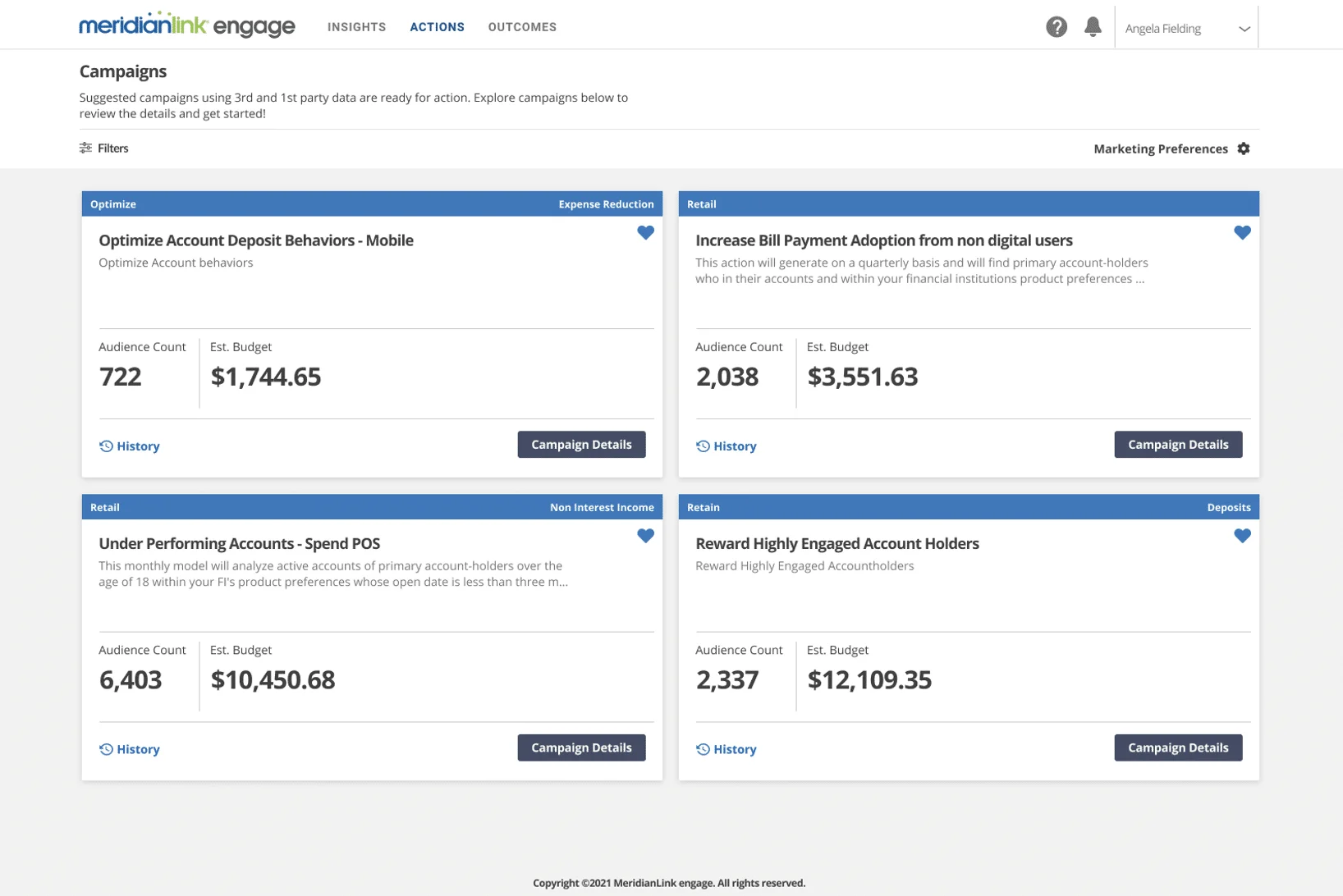
MeridianLink offers a loan origination platform that unifies consumer, mortgage, business, and indirect lending in one workflow. It connects applications, decisions, and workflows and automates underwriting and funding through configurable workflow automation and an advanced decisioning engine.
The platform includes embedded compliance controls, audit trails, and integrations for fraud and identity verification. It connects to hundreds of partners through open APIs, including core banking systems, and delivers a mobile-first application experience across channels.
Key features include:
Unified origination: Handles consumer, mortgage, business, and indirect lending in a single platform.
Decisioning engine: Automates underwriting with configurable rules, logic trees, and application routing.
Compliance controls: Embeds audit trails and fraud and identity verification integrations.
Partner integrations: Connects to hundreds of third-party services through open APIs.
Mobile-first applications: Provides digital, mobile-first application experiences across channels.
Cross-sell tooling: Uses analytics and personalized offers to support cross-sell.
Limitations (as reported by users on G2):
Dated interface: Reviewers describe parts of the interface as dated and note navigation can be less intuitive for newer staff.
Reporting: Some users say custom reporting often requires exporting to Excel for manual work.
Configuration: Deeper configuration frequently routes through vendor services rather than self-service.
Source: MeridianLink
Conclusion
Scalable underwriting software provides the essential infrastructure for organizations to manage increasing application volumes without compromising on speed or accuracy. By leveraging automated data processing and configurable rules, these platforms allow teams to maintain operational efficiency and consistent decision-making during periods of growth. Adopting these solutions helps streamline workflows, reduces manual intervention, and ensures long-term scalability in a competitive financial landscape.