What Is Loan Sizing?
Loan sizing is the process lenders use to determine the maximum loan amount they are willing to provide for a given deal. It depends heavily on the type of financing: for commercial real estate, lenders use constraints like Loan-to-Value (LTV), Debt Service Coverage Ratio (DSCR), and Debt Yield, while residential loans rely on Debt-to-Income (DTI) and property values.
Whether you are underwriting a personal mortgage, a commercial property, or a corporate debt deal, loan sizing is dictated by a strict set of metrics and limits.
Commercial real estate (CRE) sizing:
Commercial lenders calculate the maximum loan amount by back-solving for the lowest common denominator across several standardized tests. The final approved loan will typically be the lowest amount calculated by any of these constraints:
Debt service coverage ratio (DSCR): Lenders divide the property’s Net Operating Income (NOI) by the required annual debt service. A common threshold is 1.25x to 1.5x.
Loan-to-value (LTV): Caps the loan size to a set percentage of the property's appraised value. Typical thresholds range from 60% - 75%.
Max Loan = Appraised Value × Max LTV
Loan-to-cost (LTC): Used for new construction or heavy renovation projects, this caps the loan based on the total project costs (purchase price + construction costs).
Debt yield (DY): Evaluates how much cash flow a property yields compared to the principal loan amount. This isolates the loan size without relying on interest rates.
Loan life coverage ratio (LLCR): Considers the long-term viability of the loan, and whether the borrower can repay it over the life of the project, not just within a given year.
This is part of a series of articles about loan processing
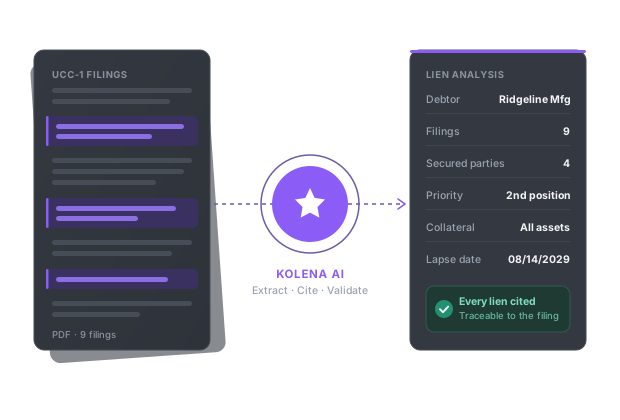
Analyze your first UCC filing in minutes with AI
Why Accurate Loan Sizing Matters in Commercial Real Estate
Accurate loan sizing influences the amount of capital a borrower can access for a commercial real estate project and reduces risks involved in lending:
It determines maximum loan proceeds: By evaluating the property’s ability to generate income and the associated risks, lenders ensure that the approved loan amount aligns with the asset’s financial performance. This process helps prevent over-leveraging, which can lead to defaults if the property fails to produce sufficient cash flow to cover debt obligations.
It reduces financing gaps: A well-sized loan ensures the borrower receives enough capital to close the deal, cover acquisition or construction costs, and avoid shortfalls that would require additional, often more expensive, sources of funding. This helps the closing process and supports project feasibility.
It improves credit decision consistency: Consistent credit decisions are critical for managing risk across a lender’s portfolio, and accurate loan sizing is a major contributor. By applying standardized metrics and methodologies to every deal, lenders reduce subjective judgment and ensure that all loans are evaluated on a level playing field. This leads to more predictable outcomes for borrowers and reliable asset quality for lenders.
Related content: Read our complete guide to the offering memorandum in real estate investing.
Key Loan Sizing Metrics
1. Debt Service Coverage Ratio (DSCR)
The debt service coverage ratio (DSCR) measures a property’s ability to cover its debt obligations from its net operating income (NOI). DSCR is calculated by dividing NOI by total annual debt service, principal and interest payments. A DSCR of 1.25, for example, means the property generates 25% more income than is needed to cover debt payments.
This metric ensures the property generates sufficient cash flow to service the loan:
Lenders often set minimum DSCR thresholds, usually ranging from 1.20 to 1.50, depending on the asset class and risk.
If the DSCR falls below the required minimum, the maximum loan size must be reduced until the ratio meets the lender’s standard.
1 Loan-to-Value Ratio (LTV)
The loan-to-value ratio (LTV) compares the loan amount to the appraised value of the property. It is expressed as a percentage and helps lenders gauge the level of collateral backing the loan. For example, an LTV of 70% means the loan covers 70% of the property’s value, with the borrower providing the remaining 30% as equity.
By maintaining conservative LTV ratios, lenders protect themselves from losses in the event of property value declines or foreclosure scenarios:
Lenders typically cap LTV ratios to mitigate risk, with maximums often set between 65% and 80% based on the property type and market conditions.
If a proposed loan exceeds the LTV cap, the loan amount must be reduced accordingly.
Lower LTVs indicate stronger collateral positions for the lender.
2. Loan-to-Cost Ratio (LTC)
The loan-to-cost ratio (LTC) is used in construction and development financing. It measures the loan amount as a percentage of the total project cost, including land acquisition, construction, and related expenses. For instance, an LTC of 75% means the lender will fund 75% of the total project cost, requiring the borrower to contribute the remaining 25% as equity.
LTC limits help ensure that borrowers have significant “skin in the game,” aligning their interests with those of the lender:
If the requested loan amount pushes the LTC above the lender’s maximum threshold, the borrower must increase their equity contribution.
This metric is important for projects with uncertain future values.
It helps manage risk during the development phase.
3. Debt Yield
Debt yield measures the property’s net operating income (NOI) as a percentage of the loan amount, independent of interest rates or amortization periods. It is calculated by dividing NOI by the proposed loan amount. For example, a debt yield of 10% means the property generates $0.10 in NOI for every $1.00 of loan principal. Higher debt yields indicate lower risk for the lender.
Debt yield provides a quick check on a property’s ability to support a loan:
Many lenders set minimum debt yield requirements, often between 8% and 10%.
If the debt yield falls below this threshold, the loan amount must be reduced to bring the metric within acceptable limits.
4. Loan Life Coverage Ratio (LLCR)
The loan life coverage ratio (LLCR) assesses a project’s ability to service debt over the entire loan term, rather than just a single year. It is calculated by dividing the net present value of projected cash flows by the total outstanding loan balance over the life of the loan. LLCR is important for projects with fluctuating cash flows, such as infrastructure or long-term leases.
This metric helps assess the long-term viability of the financing arrangement:
A higher LLCR indicates a stronger ability to service debt throughout the loan’s life.
Minimum LLCR thresholds are often set for longer-term or more complex loans.
If a project’s LLCR falls short, the loan size may be reduced or the deal restructured.
What Affects Loan Sizing?
Property Income or Business Cash Flow
The primary driver of loan sizing is the income generated by the property or business. Lenders analyze the stability, diversity, and predictability of cash flows to determine how much debt the asset can support. For commercial real estate, this often means reviewing rent rolls, lease terms, tenant quality, and historical operating performance:
Consistent income streams allow for higher loan amounts.
Volatile or uncertain cash flows result in more conservative sizing.
Fluctuations in property income, whether due to market conditions, tenant turnover, or operational inefficiencies, can affect loan sizing outcomes. Lenders may apply stress tests or sensitivity analyses to projected income to ensure the property can withstand adverse scenarios. Strong cash flow supports larger loans, while weak or uncertain income leads to tighter lending constraints.
Interest Rates
Interest rates play a role in loan sizing by affecting debt service requirements. Higher rates increase the cost of borrowing, which reduces the maximum loan amount the property’s income can support:
When interest rates rise, the same net operating income must cover larger principal and interest payments, resulting in lower DSCR and smaller loan sizes.
In low-interest environments, borrowers may qualify for larger loans as debt service payments are reduced.
Lenders often use rate stress tests or build in rate buffers during underwriting to ensure that loans remain viable even if rates increase after closing.
Amortization Period
The amortization period, or the length of time over which the loan principal is repaid, affects the size of debt service payments:
A longer amortization period spreads principal payments over more years, lowering each payment and allowing for a larger loan size, all else being equal.
Shorter amortization periods result in higher payments and smaller maximum loan amounts.
Lenders consider amortization schedules when assessing loan sizing to ensure that the payment structure matches the property’s cash flow profile and risk tolerance. In some cases, interest-only periods may be offered to increase loan proceeds, but this increases risk once principal payments begin. The choice of amortization period is a key lever in loan structuring.
Asset Type and Risk
Different property types carry different levels of risk, which affects how lenders size loans:
Stable asset classes such as multifamily housing, grocery-anchored retail, or fully leased industrial properties often qualify for higher leverage because they tend to generate predictable cash flow.
Properties with significant vacancy, such as hotels, self-storage facilities, and specialized industrial assets, may be viewed as riskier due to income volatility, operational complexity, or limited buyer demand.
As risk increases, lenders apply stricter underwriting standards and lower maximum loan amounts.
Market conditions and property-specific factors also influence risk assessments. Location quality, tenant concentration, lease expiration schedules, property age, and capital expenditure requirements can affect how much debt a lender is willing to provide. Properties in strong markets with diversified income sources generally support larger loan sizes, while assets in weaker markets or with operational challenges often face lower LTV limits, higher DSCR requirements, or additional reserve requirements.
How the Loan Sizing Process Works
Step 1: Collect Source Documents
The loan sizing process begins with gathering documents needed to evaluate the transaction. For an existing property, this typically includes rent rolls, operating statements, tax returns, lease agreements, property appraisals, borrower financial statements, and organizational documents. For construction or development projects, lenders may also require budgets, construction contracts, market studies, and project schedules.
Importance:
The goal of this step is to assemble a complete picture of the property, borrower, and proposed financing. Missing or outdated documents can delay underwriting and lead to inaccurate loan sizing results. Lenders perform an initial review to confirm that all required information has been submitted before moving forward.
Step 2: Extract and Normalize Deal Data
Once documents are collected, underwriters extract key financial and property data and organize it into a standardized format. Important inputs include net operating income (NOI), property value, occupancy levels, debt obligations, project costs, and borrower financial information. Standardizing the data ensures that different transactions can be evaluated consistently using the same underwriting framework.
Importance:
Normalization is important because financial statements and property reports may present information differently. Underwriters may adjust revenues and expenses, remove one-time items, or apply lender-specific assumptions to arrive at a stabilized view of the property's performance. These adjustments create a more accurate foundation for loan sizing calculations.
Step 3: Validate the Data
Before sizing the loan, lenders verify the accuracy and reliability of the information provided. This may involve comparing financial statements to tax returns, reviewing lease agreements to confirm rental income, validating operating expenses, and checking appraisal assumptions. Lenders also assess the quality of third-party reports and the credibility of borrower-supplied information.
Importance:
Data validation helps identify errors, inconsistencies, or unsupported projections that could distort underwriting results. If discrepancies are discovered, underwriters may request additional documentation or revise assumptions. This step is critical because loan sizing decisions are only as reliable as the data used to support them.
Step 4: Apply Lender Constraints
After the data has been validated, lenders calculate the maximum loan amount under each applicable underwriting test. Common constraints include DSCR, LTV, LTC, debt yield, and, in some cases, LLCR. Each test produces a separate maximum loan amount based on the lender's risk standards and the characteristics of the transaction. For example, a property may support a $15 million loan under the DSCR test but only a $13 million loan under the LTV test.
Importance:
By evaluating the deal against multiple constraints, lenders ensure that both cash flow and collateral requirements are satisfied.
Step 5: Identify the Binding Constraint
Once all sizing tests have been completed, the lender identifies the binding constraint, the underwriting metric that produces the lowest allowable loan amount. Because lenders size loans conservatively, the smallest result becomes the maximum loan proceeds available to the borrower.
Importance:
The binding constraint varies from deal to deal. For stabilized properties, DSCR or debt yield often limits loan size, while for acquisitions in competitive markets, LTV may be the determining factor. In construction financing, LTC frequently serves as the primary limitation. Identifying the binding constraint helps lenders and borrowers understand what factor is driving the final loan structure.
Step 6: Prepare the Underwriting Package or Credit Memo
The final step is documenting the analysis and presenting the recommendation for approval. Underwriters prepare a credit memo or underwriting package that summarizes the property, borrower, market conditions, financial performance, risk factors, and loan sizing results. The report explains the assumptions used and identifies the binding constraint that determined the final loan amount.
Importance:
This package serves as the basis for internal credit committee review and approval. It provides decision-makers with a record of how the loan was evaluated and why the recommended structure is appropriate. A well-prepared underwriting package supports consistent credit decisions and creates an audit trail for future reference.
Common Loan Sizing Bottlenecks
Manual Document Review
Manual document review is one of the most time-consuming stages of the loan sizing process. Underwriters often need to examine rent rolls, operating statements, leases, tax returns, appraisals, and borrower financial records to extract relevant data. Because these documents are received in different formats and structures, reviewing them requires significant effort and attention to detail.
The process is also prone to human error. Key figures can be overlooked, entered incorrectly, or interpreted inconsistently across transactions. As deal volume increases, manual review can become a bottleneck, slowing underwriting timelines and limiting a lender's ability to process loans efficiently. Many lenders use automation tools to accelerate document analysis and improve data accuracy.
Spreadsheet Version Control
Loan sizing calculations are often performed using spreadsheets that pass between underwriters, analysts, and credit officers. As multiple versions are created, reviewed, and updated, it can become difficult to determine which file contains the most current assumptions and calculations. This creates confusion and increases the risk of decisions being based on outdated information.
Version control issues can also make audits and quality assurance reviews more challenging. Changes to assumptions, formulas, or data may not be properly documented, making it difficult to trace how a final loan amount was determined. Centralized underwriting platforms and collaborative workflows help address these problems by maintaining a single source of truth and providing records of revisions.
Slow Exception Review
Most lenders have standard underwriting criteria, but not every transaction fits within those guidelines. When a deal falls outside established thresholds, such as having a lower DSCR, higher LTV, or unusual property characteristics, it often requires an exception review. These reviews involve additional analysis, management approval, and discussions among stakeholders.
Because exception requests require greater scrutiny, they can delay the underwriting process. Gathering supporting documentation, evaluating compensating factors, and obtaining approvals may add days or weeks to the timeline. While exception reviews are important for risk management, inefficient review processes can create bottlenecks that slow deal execution.
How Automation Improves Loan Sizing Workflows
As loan portfolios grow, manual underwriting processes can become difficult to scale. Reviewing documents, extracting data, validating information, and preparing underwriting packages requires significant time and effort. Automation helps by turning large volumes of unstructured documents into standardized, validated data used throughout the loan sizing process:
Automates document intake and data extraction: AI-powered systems collect information from leases, rent rolls, financial packages, due diligence files, and other underwriting documents. Key data points such as rent amounts, lease terms, expenses, dates, and financial metrics can be extracted automatically and organized into structured formats.
Improves data validation and accuracy: Automated workflows cross-check numbers, dates, clauses, and supporting documents to identify inconsistencies before they affect underwriting decisions. Many systems also provide source references and confidence indicators, allowing underwriters to verify extracted information quickly.
Accelerates loan sizing calculations: Once data is structured and validated, underwriting metrics such as DSCR, LTV, LTC, debt yield, and LLCR can be calculated faster.
Reduces manual review bottlenecks: Tasks that traditionally require hours or days of document review can be completed faster through automation.
Creates standardized underwriting outputs: Automation ensures that data is captured and presented consistently across transactions. Structured reports, summaries, financial models, and underwriting packages can be generated using the same framework.
Supports auditability and compliance: Automated systems maintain detailed records of extracted data, validation checks, assumptions, and workflow actions.
Enables portfolio-scale analysis: Automation allows lenders to analyze large numbers of properties and loan files simultaneously.
Improves speed from documents to decisions: By automating document processing, validation, and reporting, lenders can move more quickly from initial document collection to final underwriting recommendations.
Related content: Explore how loan underwriting software automates credit decisions.
How Kolena Automates the Document Work Behind Loan Sizing
Accurate loan sizing depends on collecting, extracting, and validating data from stacks of source documents, the most time-consuming part of underwriting. Kolena is an AI-powered document workflow automation platform for financial services that automates analysis, extraction, and reporting, helping lending and investment teams move from documents to decisions faster, with greater accuracy and full transparency. Instead of manually keying NOI, rent rolls, appraisals, and financial statements into spreadsheets, teams use Kolena to turn document-heavy reviews into structured, audit-ready outputs.
Key capabilities of Kolena for Financial Services:
Deal due diligence: Extracts key data across entire deal packages to support investment analysis and the inputs that drive loan sizing decisions.
Investment memo generation: Summarizes PPMs, legal documents, appraisals, and reports into professional-grade memos automatically, and generates investor updates and quarterly reports from templates.
Compliance testing: Reviews disclosures, statements, and advertisements against regulations automatically, accelerating internal audit and compliance checks.
Portfolio reporting: Aggregates data from multiple sources into structured portfolio updates and risk dashboards.
Source-cited accuracy: Provides confidence scoring and source citations for every result, so each extracted figure can be verified quickly.
Audit readiness: Produces traceable, regulator-compliant outputs, creating a reliable record behind every sizing decision.
Scalability: Processes hundreds of documents simultaneously with the same team, supporting portfolio-scale analysis.
Financial institutions using Kolena cut document turnaround times by 95%+ while keeping outputs accurate and audit-ready. See how Kolena accelerates investment analysis and compliance testing →