TL;DR: Automated underwriting tools use AI and rules to assess applications and decide faster. Best for document-heavy underwriting: Kolena; best for document data capture: Ocrolus; best for AI credit decisioning: Zest AI; best for end-to-end loan automation: TurnKey Lender.
What are Automated Underwriting Tools?
Automated Underwriting Tools are software systems that evaluate loan applications or insurance policies against a lender's strict guidelines. They replace slow manual reviews by pulling credit data, verifying income, and checking collateral in seconds to return an approval, denial, or referral.
How they work:
These tools connect to outside data sources like credit bureaus and tax databases. They plug this information into mathematical models to estimate how risky an applicant is.
Data collection and document ingestion: Collects applicant data from forms, uploaded documents, and connected third-party data sources.
Applicant identity and information verification: Verifies identity, income, employment, and other applicant details against trusted databases.
Risk scoring and eligibility assessment: Calculates applicant risk and determines eligibility using predefined underwriting criteria.
Rules-based decision engines: Applies consistent approval, denial, and referral rules to every application.
AI and machine learning models: Uses predictive models to improve risk assessment and detect patterns beyond static rules.
This is part of a series of articles about loan processing
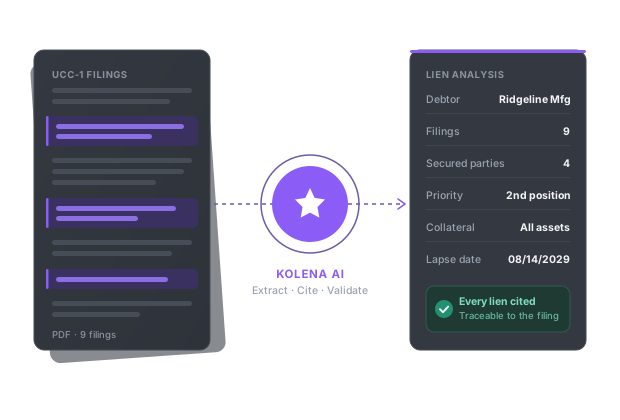
Analyze your first UCC filing in minutes with AI
Automated Underwriting Tools at a Glance
The table below summarizes the key differences between the tools covered in this section. We explore each of them in more detail further down.
Category | Solution | Best For | Key Strengths | Things to Consider |
AI Document Automation for Underwriting | Kolena | Document-heavy underwriting and loan file review | Cited, auditable extraction with enterprise security controls | Complements a core loan origination system, not a replacement |
AI Document Automation for Underwriting | Ocrolus | Cash-flow and income-based underwriting from documents | High-accuracy capture with fraud signals and LOS integration | Turnaround time and fraud flag false positives |
AI Document Automation for Underwriting | Hyland OnBase | Capturing and routing underwriting documents | Document capture, IDP, and workflow automation in one platform | Configuration and administration need IT support and training |
Automated Loan & Credit Decisioning Platforms | Zest AI | Automating credit decisions with tailored ML models | Client-specific ML scoring with fairness testing and integration | Enterprise pricing and a multi-month model build |
Automated Loan & Credit Decisioning Platforms | Provenir | Real-time credit risk decisioning across the lifecycle | Low-code decision flows with broad data orchestration | Some users report a dated interface and workflow bugs |
Automated Loan & Credit Decisioning Platforms | nCino | Commercial credit analysis inside loan origination | Automated spreading, credit memos, and risk rating tools | Broad platform that takes training and configuration |
Automated Loan & Credit Decisioning Platforms | HES LoanBox | End-to-end loan processing with configurable underwriting | Modular workflows, AI scoring, and flexible deployment | Deeper customization and reporting can extend setup time |
Automated Loan & Credit Decisioning Platforms | TurnKey Lender | Automating credit scoring for consumer and commercial loans | AI risk scoring with configurable rules and automation | Reporting and deep customization can need extra development |
Related content: Read our guide to loan underwriting software
How Automated Underwriting Differs From Manual Underwriting
Automated underwriting differs from manual underwriting in how decisions are made and how quickly applications are processed.
In manual underwriting, human underwriters review documents, verify applicant information, and apply judgment based on their experience and guidelines. This process is often time-consuming, susceptible to inconsistencies, and limited by workload and expertise.
Automated underwriting tools use data-driven algorithms and rules-based engines to assess applications. These systems quickly ingest applicant data, cross-check it with external sources, and apply standardized criteria to generate consistent decisions.
Automation reduces turnaround times from days or weeks to minutes or hours, increases scalability, and delivers uniform outcomes by minimizing subjective judgment. This makes automated underwriting well suited for high-volume lending or insurance environments.
Benefits of Automated Underwriting Tools
Automated underwriting tools help organizations process applications faster while improving consistency and operational efficiency. By replacing repetitive manual tasks with rules-based decision-making, they enable lenders and insurers to handle larger application volumes without compromising accuracy or compliance.
Faster decision-making: Process applications in minutes instead of days by automatically evaluating applicant data and applying underwriting rules.
Higher operational efficiency: Reduce manual work for underwriters, allowing them to focus on complex cases that require human judgment.
Consistent decisions: Apply the same underwriting criteria to every application, reducing variability and subjective decision-making.
Improved accuracy: Minimize human errors by automating data validation, calculations, and eligibility checks.
Better scalability: Handle growing application volumes without a proportional increase in staffing or processing time.
Lower operating costs: Decrease administrative expenses by reducing manual reviews and underwriting workflows.
Enhanced compliance: Enforce regulatory and internal policy requirements through standardized rules and detailed audit trails.
Improved customer experience: Deliver faster approvals and clearer decisions, reducing wait times.
Learn more about ai for lending document review.
How Does an Automated Underwriting Tool Work?
Data Collection and Document Ingestion
Automated underwriting tools begin by collecting data from applicants through digital forms and secure document uploads. The systems integrate with sources such as credit bureaus, payroll providers, and financial institutions to retrieve necessary information automatically. Optical character recognition and data extraction technologies are used to digitize and process scanned documents, ensuring that relevant data is captured accurately.
This phase eliminates manual data entry, reducing processing time and the potential for errors. By automating document ingestion, underwriting platforms assemble applicant profiles that support later verification and analysis steps.
Applicant Identity and Information Verification
Once applicant data is collected, automated underwriting tools verify the information to ensure authenticity and accuracy. These systems cross-reference submitted data with external databases, such as government registries, credit bureaus, and antifraud platforms, to confirm identities and detect inconsistencies. Some solutions also use biometric verification or two-factor authentication to validate applicant credentials and prevent identity fraud.
Automating verification strengthens security and accelerates processing. By flagging discrepancies or suspicious activity, underwriting tools enable organizations to address potential issues early, reducing the risk of approving fraudulent or inaccurate applications. This approach supports regulatory compliance and builds trust with customers and oversight agencies.
Risk Scoring and Eligibility Assessment
After verification, automated underwriting tools evaluate the risk profile of each applicant using scoring models and eligibility criteria. These models analyze variables such as credit history, income, debt-to-income ratios, and employment stability to assign a risk score. The scoring process is based on historical data and statistical correlations, allowing lenders and insurers to estimate the likelihood of default or claim.
The eligibility assessment component compares the applicant’s profile against predefined thresholds and policies. If the risk score meets the organization’s standards, the application proceeds; if not, it may be declined or flagged for manual review. This structured, data-driven approach ensures consistent decision-making and supports risk management objectives.
Rules-Based Decision Engines
Rules-based decision engines are at the core of many automated underwriting tools. These engines use a set of programmed rules to evaluate applications based on organizational policies, regulatory requirements, and industry practices. Each rule examines specific data points, such as minimum credit score, maximum loan-to-value ratio, or required documentation, and determines whether the application meets the conditions for approval.
This approach ensures that every application is assessed uniformly, reducing subjectivity and the risk of human error. Decision engines can be updated as policies change, allowing organizations to adapt to new regulations or market shifts. By automating compliance checks and eligibility decisions, these engines support scalable underwriting processes.
AI and Machine Learning Models
Some automated underwriting tools use AI and machine learning models to improve risk assessment and decision-making. These models analyze large datasets to identify patterns and correlations that may not be apparent through traditional rules-based approaches. By learning from new data and historical outcomes, machine learning algorithms refine risk predictions and improve accuracy.
AI-driven underwriting systems are useful for handling complex cases or unstructured data, such as written statements or alternative credit indicators. They can also detect signals of fraud or default risk that static rules might miss.
Notable Automated Underwriting Tools
How we selected these tools: We shortlisted automated underwriting tools based on their ability to ingest and validate application documents, assess borrower risk, apply configurable decision rules, and integrate with lending or policy systems.
AI Document Automation for Underwriting
1. Kolena
Best for: Document-heavy underwriting and loan file review across lending.
Strengths: Cited, auditable data extraction with enterprise security controls.
Things to consider: Works alongside a core loan origination system rather than replacing it.
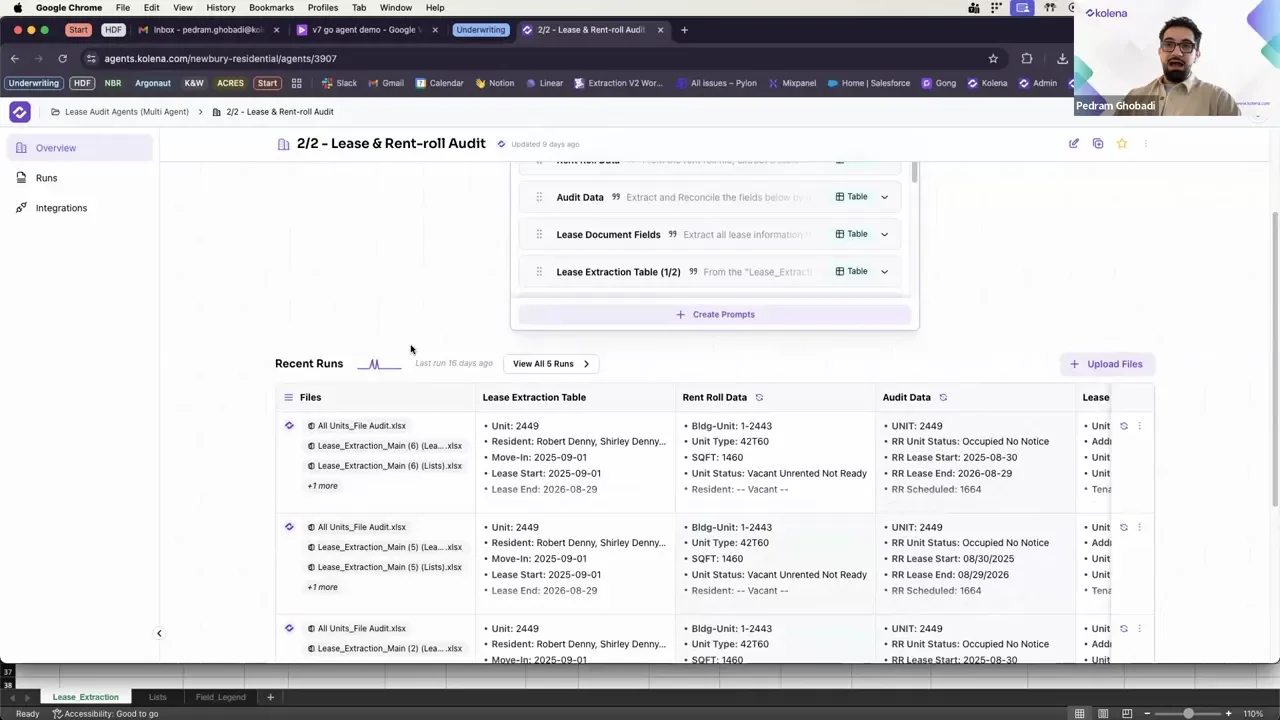
Kolena is an AI platform that turns document-heavy workflows into automated operations for banks, insurers, lenders, and real estate firms. It reviews, validates, extracts, and acts on documents such as loan packages, financial statements, leases, and claims files.
For underwriting, it reads application documents, pulls relevant data, and produces structured output. Each extracted figure is cited to its source document, and the platform records reasoning logs and audit trails so teams can trace how each result was reached.
Key features include:
Document review and validation: Reads loan packages, financial statements, leases, and claims documents and flags gaps across files.
Cited data extraction: Ties each extracted field or figure back to its source document.
Configurable underwriting workflows: Applies review steps and checks to each document set, from loan package review to compliance testing and policy review.
Sector-specific automations: Provides workflows for banking, insurance, and real estate underwriting use cases.
Cross-referencing and generation: Generates outputs such as memos and validates data by cross-referencing multiple documents in a package.
Enterprise security and governance: Includes reasoning logs, audit trails, role-based access control, encryption in transit and at rest, with PCI, SOC 2, and HIPAA compliance and no training on customer data.
Limitations:
Works alongside a core system: Feeds structured output into loan origination or spreading systems rather than serving as a full origination platform.
Upfront configuration: Building and tuning AI agents to follow specific credit policies and underwriting rules requires initial setup.
Adoption curve: Teams used to manual review may need time to adjust to AI-agent workflows.
Source: Kolena
2. Ocrolus

Best for: Cash-flow and income-based underwriting from financial documents.
Strengths: High-accuracy document capture with fraud signals and LOS integration.
Things to consider: Turnaround can take time and fraud flags can raise false positives.
Ocrolus is a document AI and analytics platform for lenders that converts financial documents into structured data. It specializes in bank statements, pay stubs, and tax forms, capturing data at a stated accuracy above 99% regardless of format or quality.
The platform pairs automated extraction with a human-in-the-loop layer and adds fraud signals on top of the captured data. Outputs feed underwriting through an API and a dashboard, with direct integrations into loan origination systems.
Key features include:
Document understanding: Extracts data from bank statements, pay stubs, and tax forms across e-statements, scans, and mobile images.
Cash flow analysis: Measures revenue and debt capacity from transaction data.
Income calculation: Evaluates income across borrower types, including wage earners, self-employed, gig, and rental income.
Fraud detection: Flags altered or fake documents and data inconsistencies.
Human-in-the-loop verification: Combines automated processing with human review.
API and LOS integration: Delivers structured output through an API and dashboard, with integrations into loan origination systems.
Limitations (as reported by users on G2):
Processing time: Some users report document reviews can take up to a full business day.
Fraud flag false positives: Some suspicious-activity flags require manual follow-up.
Limited data organization: Uploaded documents are consolidated but not structured much beyond the source files.
Pricing: Some reviewers would like lower pricing.
3. Hyland OnBase
Best for: Capturing and routing underwriting documents in content-heavy operations.
Strengths: Document capture, IDP, and workflow automation on one platform.
Things to consider: Configuration and administration require IT support and training.
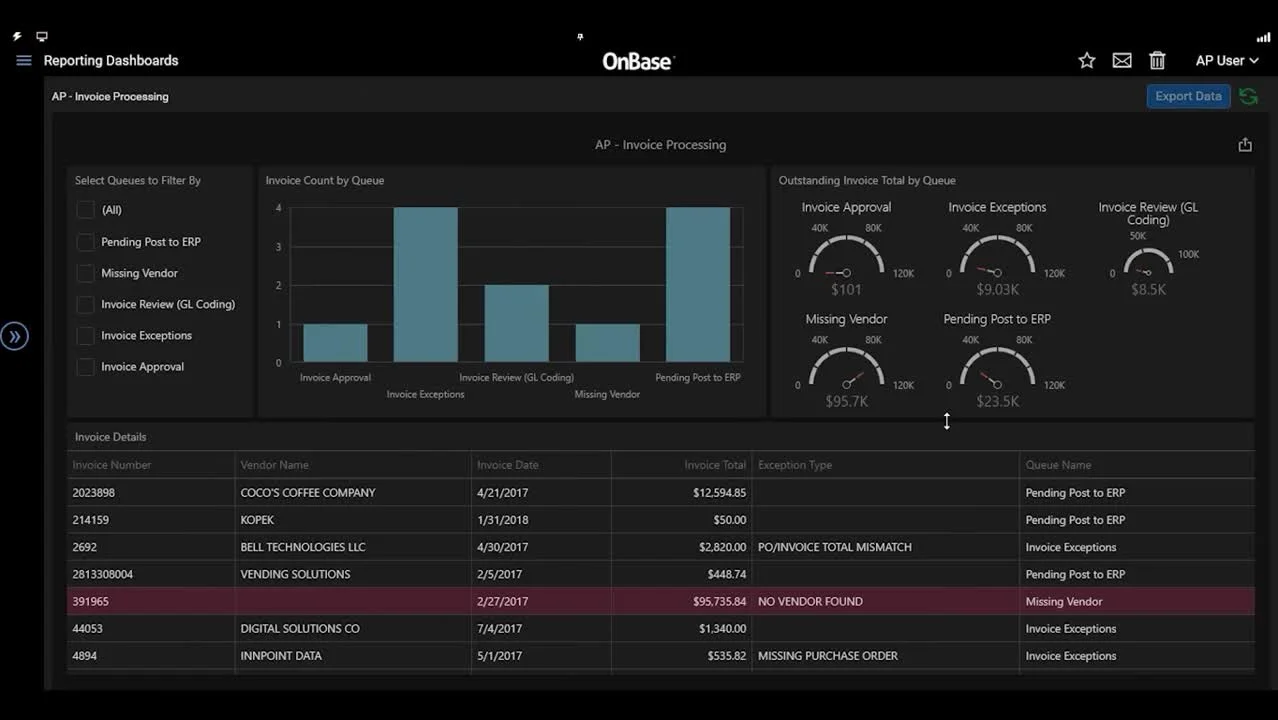
Hyland OnBase is an enterprise content services platform that manages the documents and processes behind underwriting. It captures content from multiple channels, stores it in a single repository, and automates workflows that move applications and supporting documents through review.
For insurers and financial institutions, OnBase addresses document handling that slows underwriting, claims, and policy communication. It extends core line-of-business systems and supports compliance and information security.
Key features include:
Intelligent document processing: Hyland IDP captures, separates, classifies, extracts, and enriches document data using AI.
Multichannel content capture: Captures documents from various channels and formats into a single repository.
Process automation: Automates workflows that route underwriting and claims documents for review and decisions.
Low-code application development: Provides low-code and open-source development tools to build tailored solutions and modernize legacy systems.
Core system integration: Connects content across existing line-of-business systems.
Compliance and security: Manages information across its lifecycle with controls that support compliance and data security.
Limitations (as reported by users on G2):
Configuration complexity: Configuration and administration require IT support and training.
Learning curve: Reviewers describe a steep learning curve for new users.
Pricing model: Some users find the pricing model and total cost of ownership challenging.
Maintenance needs: The system needs periodic tune-ups such as query optimization and component refreshes.
Source: Hyland OnBase
Automated Loan and Credit Decisioning Platforms
4. Zest AI
Best for: Automating credit decisions with tailored machine-learning risk models.
Strengths: Client-specific ML scoring with fairness testing and integration.
Things to consider: Enterprise pricing and a multi-month model build and deployment.
Zest AI provides AI-automated credit underwriting built on machine learning models tailored to each lender's borrowers and data. The models produce risk rankings that the company states are more accurate than generic scorecards, allowing lenders to auto-decision a large share of applications.
The platform is built for the US consumer lending environment, with models optimized for accuracy and fairness. It applies bias-reduction techniques and integrates underwriting insights into existing lending systems.
Key features include:
Custom machine learning models: Builds client-tailored risk models trained on a lender's data.
Automated decisioning: Auto-decisions up to 80% of applications and optimizes policies and cut-offs.
Fairness and bias reduction: Applies adversarial debiasing and less-discriminatory-alternative searches.
Broad product coverage: Supports auto, credit card, home equity, personal, and SMB loan decisioning.
Lending system integration: Integrates underwriting insights into existing lending systems.
Model monitoring and support: Includes model monitoring and periodic business reviews.
Limitations (based on publicly available sources):
Enterprise pricing: Priced as an enterprise solution that smaller portfolios may find hard to justify per loan.
Implementation time: Deployment can take several months, including data preparation and validation.
Data preparation effort: Sourcing, licensing, and integrating alternative data is the lender's responsibility.
Reason code complexity: Some reviewers find the generated reasons complex to work with.
5. Provenir

Best for: Real-time credit risk decisioning across the application lifecycle.
Strengths: Low-code decision flows with broad data orchestration and ML deployment.
Things to consider: Some users report a dated interface and workflow bugs.
Provenir is an AI decisioning platform that automates credit risk assessment across the customer lifecycle. Its low-code, drag-and-drop builder lets teams create, modify, and publish decisioning flows and promote changes across development, testing, and production.
The platform orchestrates data from identity, fraud, and credit sources through a single API and feeds it into rules and machine learning models. This supports real-time credit decisions on loan applications.
Key features include:
Low-code decision flow builder: Creates, modifies, and publishes decisioning flows through a visual interface with single-click deployment.
Dynamic data orchestration: Connects to identity, fraud, and credit data sources through a single API.
Machine learning deployment: Deploys rules and machine learning models and monitors them.
Real-time credit decisioning: Assesses loan applications in real time.
Lifecycle coverage: Supports onboarding, customer management, collections, and fraud and identity.
Testing and promotion: Includes testing, simulation, and code management to move changes between environments.
Limitations (as reported by users on G2):
Dated interface: One reviewer described the user interface as outdated.
Workflow bugs: A user reported bugs affecting the workflow builder.
Mixed recommendation: A reviewer suggested exploring other options if available.
6. nCino
Best for: Commercial credit analysis and underwriting inside loan origination.
Strengths: Automated financial spreading, credit memos, and risk rating tools.
Things to consider: Broad platform that takes training and configuration to run well.
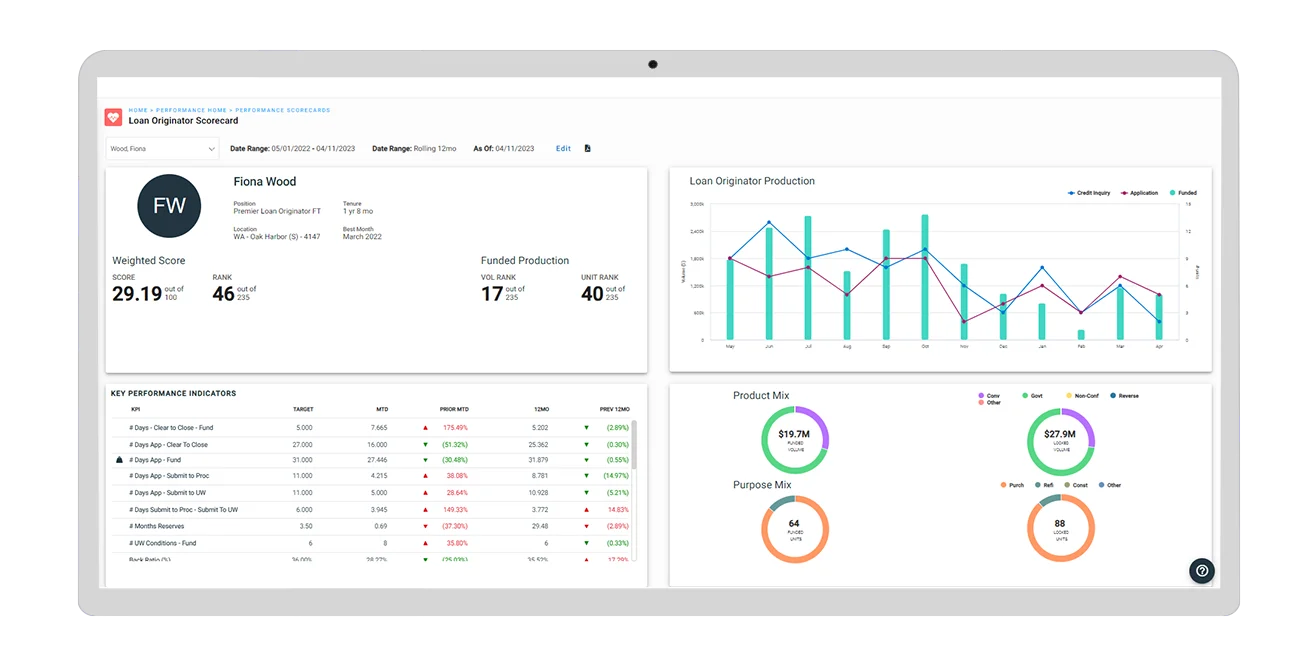
nCino's credit analysis suite is a set of underwriting tools built into its commercial loan origination workflow. Underwriters use it to analyze financial statements, forecast cash flows, and identify risks and trends, with automation reducing manual spreading and re-keying.
The suite standardizes credit analysis and centralizes spreading data across teams. It produces credit memos, tracks collateral, and assigns risk ratings and grades within a single platform.
Key features include:
Automated spreading: Automates data capture and categorization from financial statements.
Credit memo creation: Generates credit memos using current platform data and institution templates.
Cash flow analysis: Analyzes and forecasts future cash flows for C&I and commercial real estate loans.
Debt and schedule analysis: Imports and analyzes borrower debt obligations and captures line-item detail.
Risk ratings and grades: Applies user-defined risk ratings and calculates grades using weighted formulas with an approval process.
Collateral management: Tracks collateral, the loans it secures, and lien positions.
Limitations (as reported by users on G2):
Configuration limits: Limitations in out-of-the-box configuration require enhancements over time.
Learning curve: Requires significant training and practice.
Breadth over depth: Spans many areas rather than specializing in a few.
Borrower-facing experience: One reviewer found the end-borrower experience clunky.
Source: nCino
7. HES LoanBox

Best for: End-to-end loan processing with configurable AI underwriting.
Strengths: Modular workflows, AI scoring, and flexible deployment options.
Things to consider: Deeper customization and reporting can extend setup time.
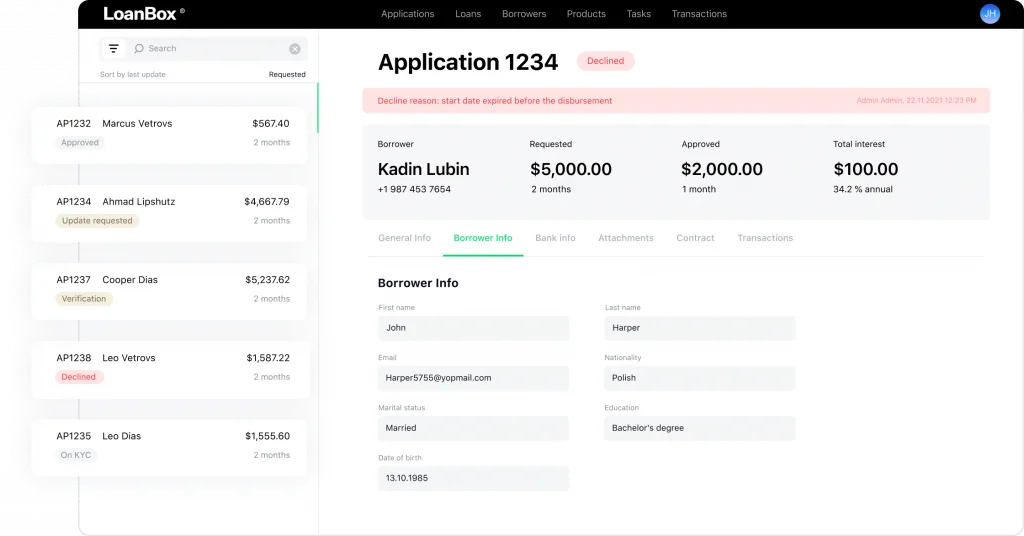
HES LoanBox is a modular lending platform from HES FinTech that covers onboarding, loan origination, servicing, and collections in one system. For underwriting, it lets lenders configure manual, hybrid, or fully automated decision workflows aligned to their risk framework.
The platform combines built-in scorecards with GiniMachine, an AI scoring and decisioning engine, to assess repayment probability and automate approvals. It captures documents through optical character recognition, pulls open banking and KYC data, and runs on cloud or on-premise deployments.
Key features include:
Configurable underwriting: Supports manual, hybrid, or fully automated underwriting workflows aligned to a lender's risk framework.
AI scoring and decisioning: Uses the GiniMachine engine and built-in scorecards to predict repayment probability and automate preapprovals.
Document and data capture: Applies optical character recognition and pulls open banking data and KYC checks.
Risk management: Sets cut-off thresholds, combines internal models with external data, and flags risky assets.
Modular, white-label architecture: Offers configurable microservice modules and cloud or on-premise deployment.
Integrations and security: Connects to third-party services and is built on ISO 27001 and SOC 2 certified foundations with audit logs.
Limitations (as reported by users on Capterra):
Setup and customization time: Initial setup and customization can take time.
Configuration for advanced features: Advanced features require additional configuration.
Dashboard and portal setup: Dashboard customization and borrower portal branding can take extra effort.
Source: HES
8. TurnKey Lender
Best for: Automating credit scoring and decisions for consumer and commercial loans.
Strengths: AI risk scoring with configurable rules and end-to-end automation.
Things to consider: Reporting and deep customization can require extra development.
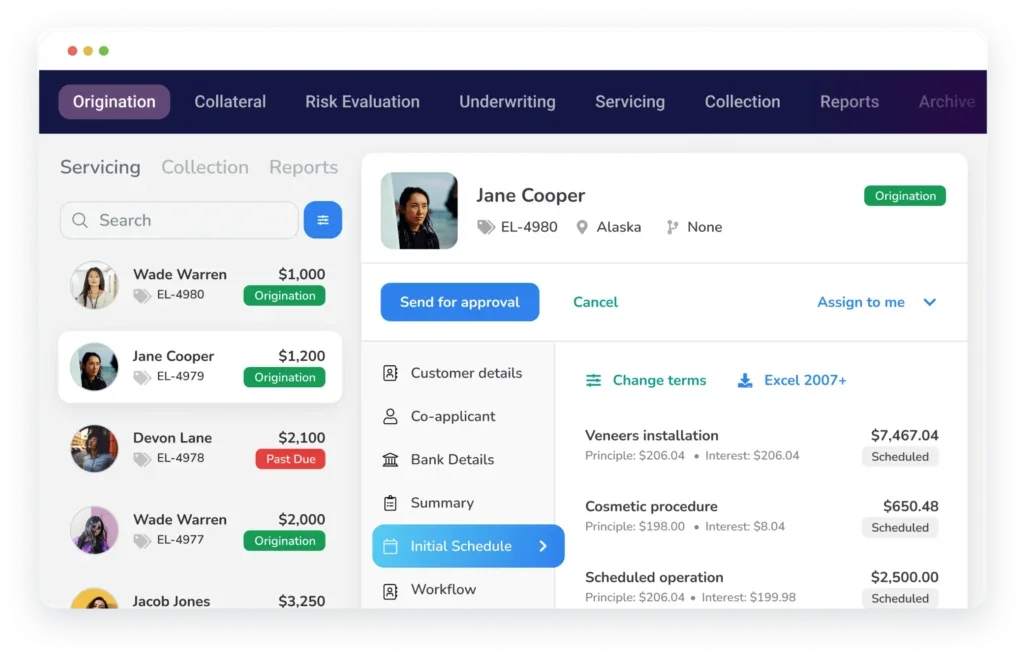
TurnKey Lender is a lending automation platform whose underwriting software automates credit decisioning. Its AI-driven decision engine uses traditional and alternative data to score borrowers and generate credit decisions.
The software analyzes credit history, applies configurable decision rules, and produces scoring reports that summarize applicant creditworthiness. Scorecards include stop rules that automatically reject low-quality deals, and the system integrates with existing lending infrastructure.
Key features include:
Intelligent risk scoring: Uses traditional and alternative data to score borrowers and generate credit decisions.
Credit history analysis: Analyzes payment history and outstanding debts.
Customizable decisioning rules: Configures decision rules and scorecards, including stop rules.
Instant scoring reports: Produces scoring reports summarizing creditworthiness.
End-to-end automation: Automates underwriting within the loan management platform.
Document management and integration: Stores borrower documents and integrates with existing systems and third-party data sources.
Limitations (as reported by users on Capterra):
Pricing: The platform is not inexpensive, and improvements can increase cost.
Performance: Some reviewers report the platform can be slow at times.
Custom reporting: Custom application changes through standard reporting can require additional development.
Customization limits: Expanding beyond readily configurable features can be difficult for niche scenarios.
Source: TurnKey Lender
Conclusion
Automated underwriting solutions significantly enhance efficiency by combining data-driven insights with standardized decision rules. These systems minimize human error and ensure compliance while drastically reducing processing times for complex applications. Investing in the right technology empowers lenders to scale operations and improve overall applicant experiences. Organizations that embrace these tools gain a scalable foundation for accurate, consistent risk assessment.