For PE and real estate investment firms in 2026, AI is the better answer for data-room review and IC memo support: an AI platform surfaces cited key assumptions and risks from deal documents in hours, onshore, where offshore processing introduces batching delays and NDA/data-residency exposure on confidential deal data. Offshore diligence support still has a role for low-sensitivity, low-urgency research, but the confidentiality, speed, and citation standards of IC work favor AI.
This compares the two models for PE firms, real estate investment managers, and family offices.
This is part of a series of articles about BPO Replacement.
What Offshore Investment Due Diligence Typically Looks Like
Offshore diligence and IC-memo support is an established service. Specialist providers staff analysts who read CIMs, financial models, historical financials, legal agreements, and other deal documents and produce diligence summaries and draft IC memos, usually on a per-FTE or per-engagement basis. For a lean deal team, it adds research capacity at lower cost and can accelerate the grind of summarizing a data room.
Nine free AI document tools — pick your workflow
Where the Offshore Model Falls Short for Due Diligence
The constraints are sharp in deal work. Confidentiality sensitivity: routing confidential deal documents to an offshore team creates data-residency and NDA exposure that sellers and LPs increasingly scrutinize — for sensitive transactions it can be a non-starter. Time pressure: deal timelines are fixed and competitive, and offshore batching loses against rival bidders who turn diligence faster. Citation standard: IC presentations require sourced figures, and offshore summaries tend to deliver conclusions without the underlying citations, so your team re-derives the numbers before they can stand behind them. Attrition of 15–30% also means the analyst who learned your IC format and investment thesis turns over roughly quarterly.
How AI Compares
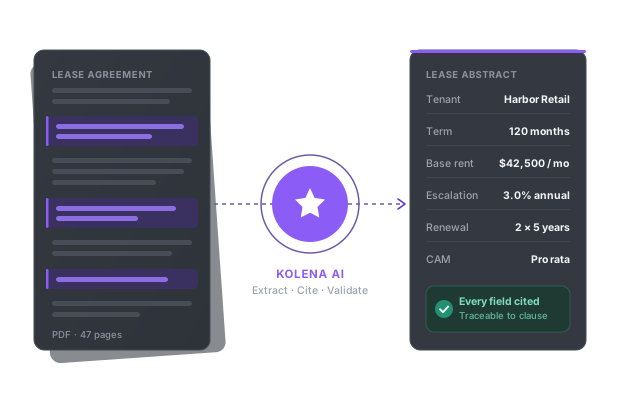
AI reads the full data room, surfaces key assumptions and risks, and cites every figure to its source document — in hours, inside your own secure, onshore environment with no offshore NDA exposure. One PE customer uses Kolena for IC memo drafting and data-room due diligence, reducing manual effort and improving consistency across reports. The market is moving this way — HFS Research found three in four enterprise leaders expect to pivot from staff-augmentation to AI-led delivery within two years.
| Factor | Offshore BPO | AI (Kolena) |
|---|---|---|
| Confidentiality | Offshore handling; NDA/residency exposure | Onshore, in your secure environment |
| Turnaround | Per-engagement batch; loses to faster bidders | Hours across the data room |
| Citations | Conclusions without sourced figures | Every figure cited to its source document |
| Consistency | Varies by analyst (15–30% attrition) | Same rubric across every deal and memo |
| Cost model | Per-FTE/per-engagement; rises with wages | Software cost; flat as volume scales |
| Data residency | Offshore | Onshore, SOC 2 Type II, no training on your data |
For IC work, the citation and the data residency together are what let a deal team move fast and still stand behind every number in the memo.
Who Should Make the Switch — and Who Shouldn't
Switch when deals are confidential and time-sensitive, when IC presentations demand sourced figures, or when offshore data handling is an LP or counterparty concern. Offshore can still fit low-sensitivity, low-urgency research that doesn't touch confidential deal data. AI handles the reading, extraction, and drafting; the investment judgment and IC decision stay entirely with your team.
Related articles: ai vs offshore kyc bank statement analysis and genpact alternative.
How Kolena Works
Kolena is an AI document automation platform built for PE firms, real estate investment managers, and family offices. CIMs, financial models, historical financials, legal agreements, and data-room documents go in; surfaced assumptions, flagged risks, and a sourced IC-memo draft come out in hours.
It reads any format inside your secure environment and pushes structured output to your analytics and reporting stack, with every figure cited to its source document so IC sees sourced numbers. Every run produces a full audit trail: not just what was extracted, but the specific clause, line, or figure that justified each data point. SOC 2 Type II certified, onshore processing, no training on customer data.