AI loan underwriting document review takes loan-file turnaround from days to hours by reading the entire file at once, extracting and cross-referencing the key data across every document, and returning an underwriter-ready package with each figure cited to its source. One private-lending customer cut turnaround from about five days to hours doing exactly this.
This is for private lenders, CRE lenders, and balance-sheet banks running commercial loan origination, where the document-review step stands between a complete file and a credit-committee decision.
This is part of a series of articles about Loan Processing.
The Pain: Days of Review Before Credit Committee
A commercial loan file is a thick, varied package — tax returns, rent rolls, T12s, bank statements, entity documents, appraisals, environmental reports — and turning it into something an underwriter can decide on means more than reading each document. It means reconciling them against each other: does the rent roll tie to the T12, does the appraisal's assumptions match the actuals, do the entity documents support the borrowing structure. Done manually that's days of work; pushed offshore, it runs a 24–48 hour queue and each document is handled in isolation, so the cross-checks that catch problems land back onshore with your underwriters anyway.
Analyze your first UCC filing in minutes with AI
How AI Handles It
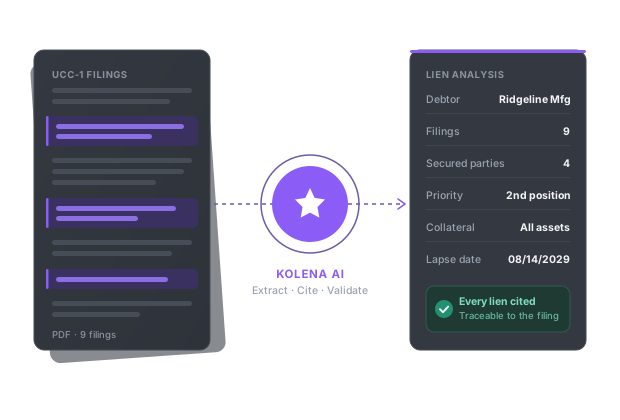
AI reads the full loan file as one connected package rather than a stack of separate PDFs. It extracts the key figures from each document, cross-references them — flagging where the rent roll and T12 disagree, where a number doesn't tie, where a document is missing — and returns a structured, underwriter-ready output. Every figure carries a field-level citation back to the source document, so the underwriter verifies rather than re-derives.
| Step | Manual / offshore | AI underwriting document review |
|---|---|---|
| Reading the file | Days, or a 24–48 hour offshore queue | Hours |
| Cross-referencing | Manual, late; or isolated documents offshore | Across the full file, automatically |
| Missing-item detection | Depends on reviewer | Flagged systematically |
| Output | Hand-built package, sourcing varies | Underwriter-ready, every figure cited |
| Turnaround (documented) | ~5 days | Hours |
The five-days-to-hours result isn't hypothetical: one private-lending customer achieved it, alongside a 96% reduction in UCC filing review labor on the same files.
What Changes in the Workflow
Compressing review from days to hours changes what a lending team can do. Deals stop slipping past credit-committee dates because a file was still being assembled. Volume surges — a busy origination month, a rate-driven wave — no longer require temporary headcount, because AI has no fixed throughput ceiling. And because every figure is sourced, the credit memo that goes to committee shows traceable numbers rather than conclusions an analyst has to defend from memory.
Who Should Adopt This — and Who Shouldn't
Adopt it when loan volume is recurring, when deals are time-sensitive, or when you want sourced files your underwriters can trust. A lender doing a handful of simple, low-urgency files a month with spare capacity may not need it. And to be clear about scope: AI handles document extraction, cross-referencing, and packaging — the credit decision stays entirely with your underwriters, who simply get to it faster.
How Kolena Works
Kolena is an AI document automation platform built for commercial lenders and credit teams. Tax returns, rent rolls, T12s, bank statements, entity documents, appraisals, and environmental reports go in; an underwriter-ready package with cross-referenced, cited data and flagged gaps comes out in hours.
It reads any format and pushes structured output into your loan-origination and spreading systems, with every figure cited to its source document so credit committee reviews sourced numbers. Every run produces a full audit trail: not just what was extracted, but the specific line, field, or clause that justified each data point. SOC 2 Type II certified, onshore processing, no training on customer data.