AI extracts investment insights from earnings call transcripts by reading each one and returning a structured summary — key guidance figures, topics management struggled to answer, language changes from the prior quarter, analyst concerns ranked by frequency, and non-GAAP reconciliation mentions — with every quote cited to its place in the transcript. It surfaces the cross-quarter patterns that manual reading tends to miss.
This is for equity analysts, PE investors tracking portfolio companies, hedge fund analysts, and investor relations teams.
This is part of a series of articles about AI for Finance.
The Pain: Hours per Call Across a Coverage Universe
A transcript carries far more than the headline number: guidance, management tone, which questions get crisp answers and which get deflected, and language that shifts quarter over quarter in ways that signal confidence or concern. Reading carefully for all of that is slow — a buy-side analyst covering 15–25 names can spend two to three hours per company, 50–75 hours across an earnings season — and it's inconsistent, because no analyst reads every call with the same attention under that kind of time pressure. The signal that matters most often lives in the gap between this quarter's language and last quarter's, which is exactly what's hardest to hold in your head across a universe.
Draft your first investment memo in minutes with AI
How AI Handles It
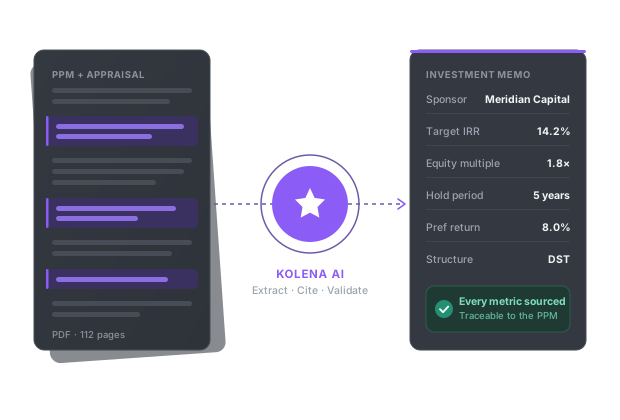
AI reads each transcript and extracts the signal in a consistent structure: key guidance figures, the topics management struggled to answer directly, language changes versus the prior quarter, analyst concerns clustered and ranked by frequency, and non-GAAP reconciliation mentions. Every extracted point is cited to its location in the transcript, so an analyst can jump straight to the exact exchange. Crucially, because the extraction is consistent across calls and quarters, AI can surface pattern changes — a topic that suddenly dominates analyst questions, hedged language replacing confident guidance — that manual reading misses when each call is read in isolation.
| What to catch | Manual reading | AI earnings analysis |
|---|---|---|
| Guidance figures | Noted per call | Extracted and cited |
| Deflected topics | Depends on attention | Flagged where answers were evasive |
| Language change QoQ | Hard to hold across quarters | Compared automatically vs. prior quarter |
| Analyst concerns | Read one by one | Clustered and ranked by frequency |
| Coverage at scale | 2–3 hours per company | Summary first, deep-dive where flagged |
What AI adds beyond speed is the cross-quarter and cross-analyst view: topic clustering across the Q&A and language drift across quarters are patterns, not single data points, and patterns are what consistent extraction reveals.
What Changes in the Workflow
The analyst reads the AI summary first and digs into the full transcript only where it's flagged — the deflected question, the changed guidance, the cluster of analyst concern. That inverts the workflow: instead of reading every line of every call hoping to catch the signal, the analyst spends time on the passages that actually carry it, across the whole coverage universe rather than just the names time allowed. The judgment — what the pattern means for the thesis — stays with the analyst, now applied consistently across every name.
Who Should Adopt This — and Who Shouldn't
Adopt it when you cover enough names that reading every call in full is impractical, or when consistency across a universe matters to your process. An investor following one or two companies closely may prefer to read every word, and should. AI doesn't replace the close read where it counts — it tells you where it counts, and handles the breadth so the depth is spent well.
Related articles: ai comparable company analysis and ai portfolio monitoring.
How Kolena Works
Kolena is an AI document automation platform built for equity analysts, PE investors, hedge funds, and IR teams. Earnings call transcripts go in; a structured summary — guidance figures, deflected topics, language changes, ranked analyst concerns, non-GAAP mentions — comes out, with every quote cited to its place in the transcript.
It reads transcripts in any format, compares each call against prior quarters, and pushes structured output into your research workflow, so the summary points you to the passages that matter. Every run produces a full audit trail: not just what was extracted, but the specific line, figure, or passage that justified each data point. SOC 2 Type II certified, onshore processing, no training on customer data.