AI automates comparable company analysis by reading each comparable's filings and transcripts, extracting the financial line items with citations, normalizing them across companies, and populating a structured comps table where every figure links to its source filing. When a comparable reports new results, the table updates from the new filing rather than requiring a manual re-read.
This is for PE analysts, investment bankers, equity research analysts, and M&A teams who build comps tables from public filings and earnings transcripts.
This is part of a series of articles about AI for Finance.
The Pain: Days of Reading per Comps Table
A comps table is only as good as the reading behind it. For each comparable company, an analyst works through the 10-K, recent 10-Qs, the latest earnings transcript, press releases, and sometimes analyst reports — extracting revenue, EBITDA, margins, growth rates, multiples, and guidance. Done by hand across ten to fifteen comparables, that's days of work, and it's perishable: the moment one comparable reports, the table is stale and the reading starts again. Manual transcription also introduces transposition errors and inconsistencies in how figures are defined from one company to the next.
Draft your first investment memo in minutes with AI
How AI Handles It
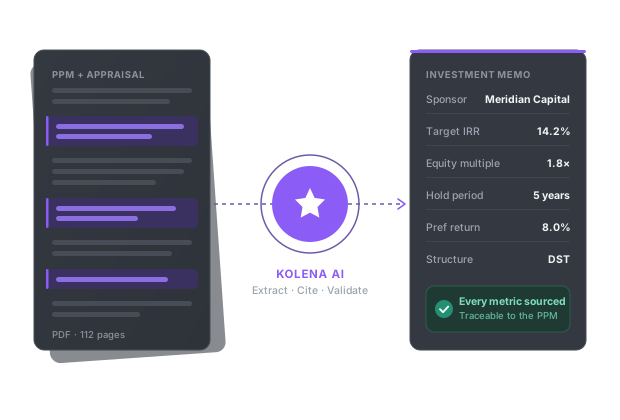
AI reads each filing and transcript, extracts the relevant financial line items, and normalizes them across companies so the same metric means the same thing in every column. Each extracted figure carries a citation back to the specific filing and line it came from. Populating the table becomes a review step rather than a transcription marathon, and consistency across companies is enforced by the normalization rather than by the analyst's memory.
| Factor | Manual comps | AI-assisted comps |
|---|---|---|
| Build time | Days across 10–15 companies | Populated quickly, then reviewed |
| Sourcing | Manual transcription | Every figure cited to its filing |
| Consistency | Varies by analyst and definition | Normalized across companies |
| Updates | Re-read when a comparable reports | Updates from the new filing |
| IC defensibility | From memory or transcription | Traceable to source filings |
The defensibility point matters in an IC presentation: a comps table built from cited, AI-extracted figures stands up to a partner's "where did this number come from?" in a way a manually transcribed one often can't.
What Changes in the Workflow
Two things change. First, speed: the table that took days to assemble is populated quickly, freeing the analyst to spend time on the judgment calls — which comparables actually belong in the set, how to adjust for one-time items, what the multiples imply. Second, maintenance: because the table updates from new filings, keeping a living comps set current stops being a recurring manual chore. The analyst verifies the cited figures rather than hunting for them.
Who Should Adopt This — and Who Shouldn't
Adopt it when you build comps regularly, maintain living comp sets, or need IC-ready sourcing on every figure. An analyst who builds one simple comps table a year may not need it. And AI handles the extraction and normalization; the analytical judgment — comparable selection, adjustments, and what the valuation implies — stays with the analyst.
Related articles: ai earnings call analysis and Banking Compliance Automation.
How Kolena Works
Kolena is an AI document automation platform built for PE, investment banking, equity research, and M&A teams. 10-Ks, 10-Qs, earnings transcripts, and press releases for each comparable go in; a normalized comps table — revenue, EBITDA, margins, growth, multiples, guidance — comes out, every figure cited to its source filing.
It reads any filing format, normalizes line items across companies, and pushes structured output into your comps model, updating from new filings as comparables report. Every run produces a full audit trail: not just what was extracted, but the specific line, figure, or passage that justified each data point. SOC 2 Type II certified, onshore processing, no training on customer data.