Lease abstraction used to be one of those inevitable bottlenecks in property acquisitions: hundreds of pages of leases, multiple amendments, rent rolls to reconcile and an army of manual reviewers. The result? Slow deal timelines, costly outsourcing and a nagging fear that something important was missed.
Why lease abstraction slows acquisitions
Two issues repeatedly create delays. First, incomplete document sets. Teams often receive a batch of files and then spend days or weeks chasing missing leases, amendments or exhibits. Second, due diligence packages are dense: dozens of leases, rent rolls, T12s, and jurisdictional regulations that must align with what the leases state.
That complexity creates two downstream problems: ensuring data accuracy (do the leases match the rent roll?) and surfacing risk (termination rights, co-tenancy clauses, exclusive use restrictions). When your abstraction process itself is slow, everything else in underwriting and modeling slows too.
Why general-purpose AI tools fall short
Using a chat interface or a one-off LLM for lease abstraction sounds tempting, but those tools were not built for large batches of legal documents. They typically:
Require one-document-at-a-time context, so amendments break the chain of understanding.
Produce free-form answers that must be copied into your templates and reformatted.
Risk hallucinations once context scales beyond what the model can safely hold.
Become inflexible when new clause types or regulatory nuances appear.
What a purpose-built solution looks like
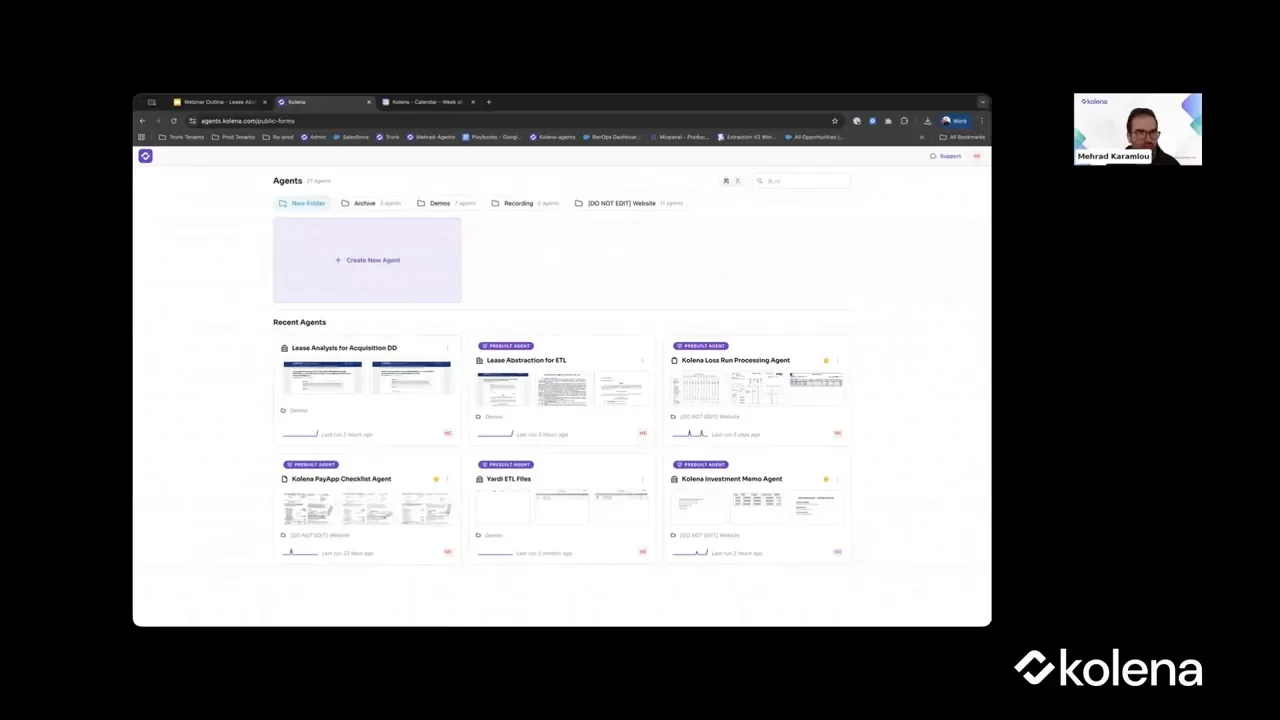
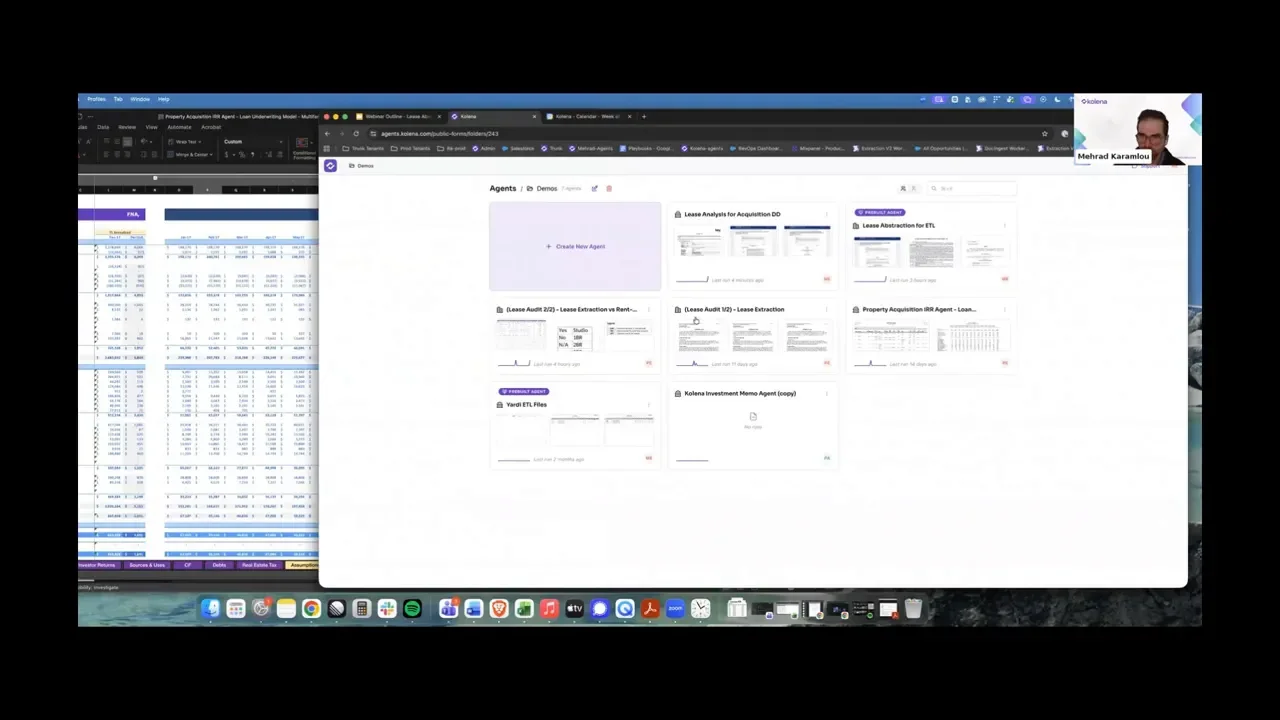
The right approach uses multiple specialized AI agents that work together in an end-to-end workflow. Drop your documents in (or email them), let the agents run, and get back the exact output you need — Excel-ready lease abstracts, rent audit results, IRR models or import files for lease management systems.
Learn more about our integrations and template support
Key capabilities to expect
Batch document ingestion — handle leases, amendments and exhibits together instead of one-by-one.
Template-first outputs — results export to the exact Excel, Word or underwriting model you use.
Inline citations — every extracted data point links back to the exact document and page, so reviewers can verify quickly.
Explainability — each extraction includes reasoning showing how the agent reached its conclusion.
Multi-model quality control — extractions are validated across models and repeated requests to reduce errors and hallucinations.
Iterative questioning — ask new questions across all processed leases (for example, “list all amendments that change term length”) and get answers immediately without reprocessing files.
Regulatory web checks — combine lease text with state or industry-specific regulations automatically identified by the agent.
How the process works in practice
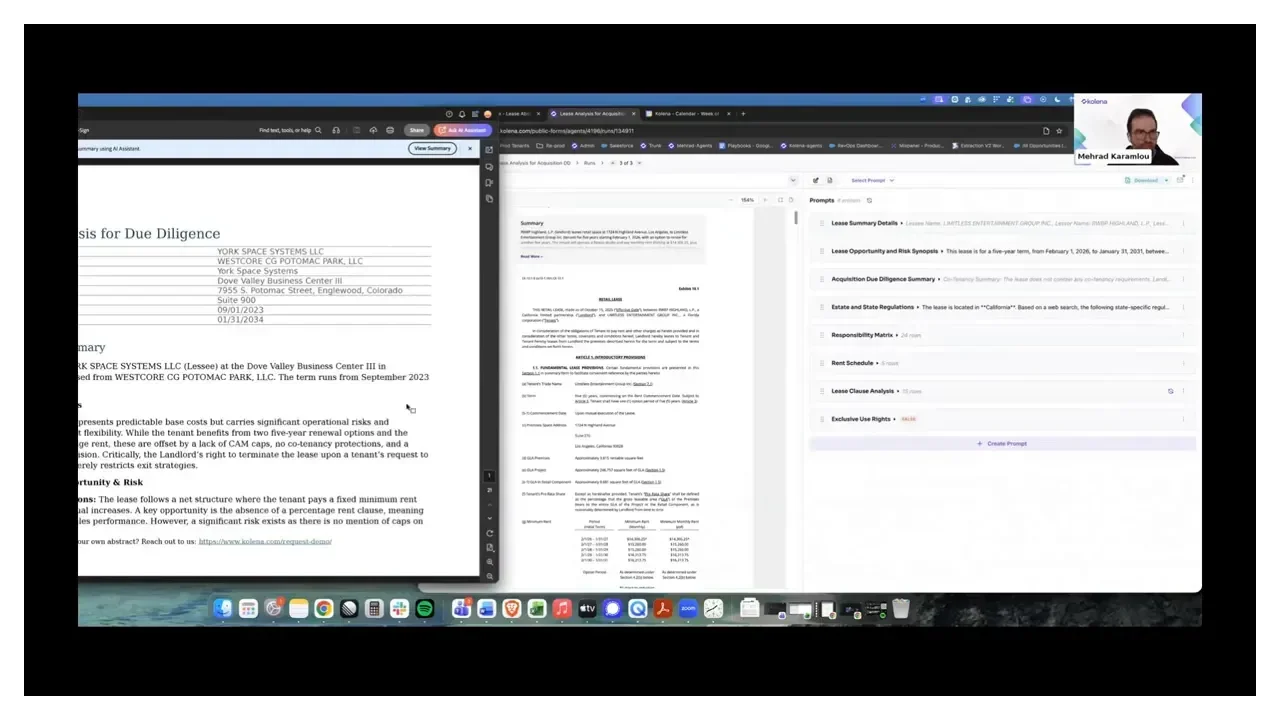
Inputs can be as simple as dragging and dropping a PDF folder or sending an email to a dedicated intake address. Behind the scenes, agents parse clauses, extract rent schedules, identify responsibilities, and populate whatever template you require. The output is not a chat response — it’s a structured deliverable ready for underwriting or asset management.
Extraction structure that accelerates review
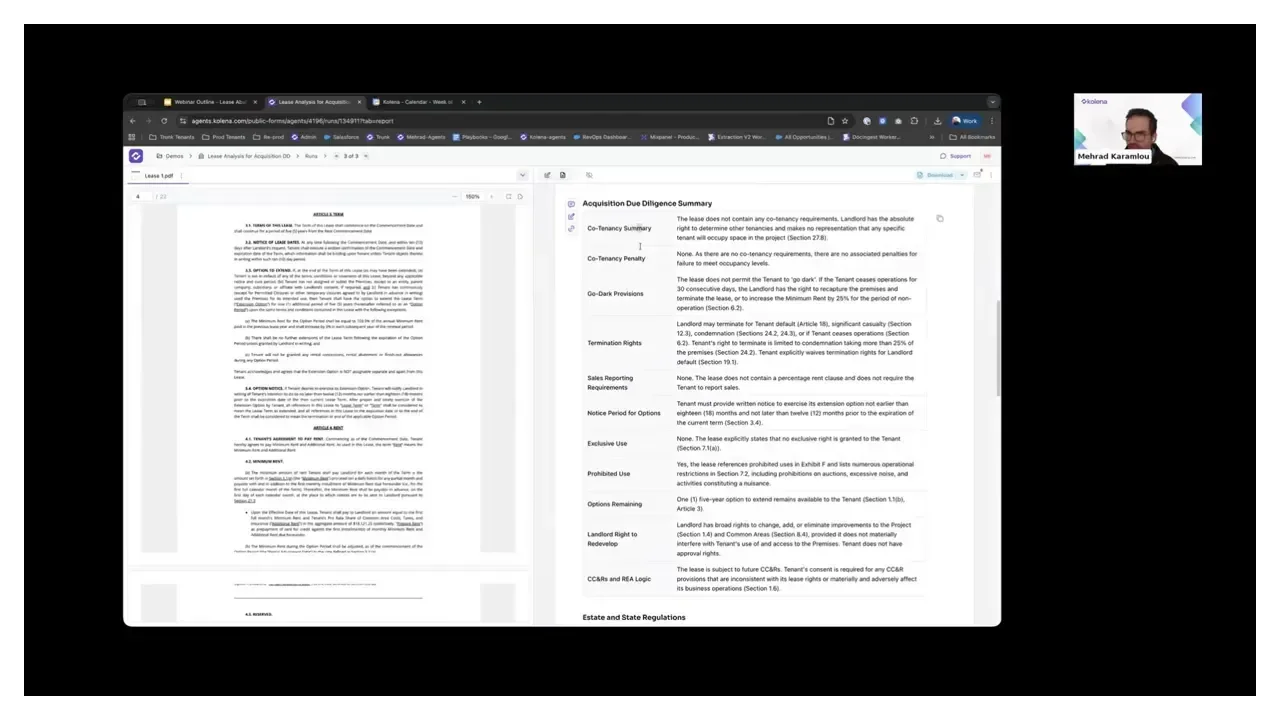
Each extraction typically includes three pieces:
Field values — the exact data you asked for (base rent, lease term, options, etc.).
Inline citations — precise links to the source document and page for fast verification.
Reasoning — a short narrative explaining how the agent interpreted complex clauses and which sections informed the answer.
Examples that matter
A few practical automations change the game:
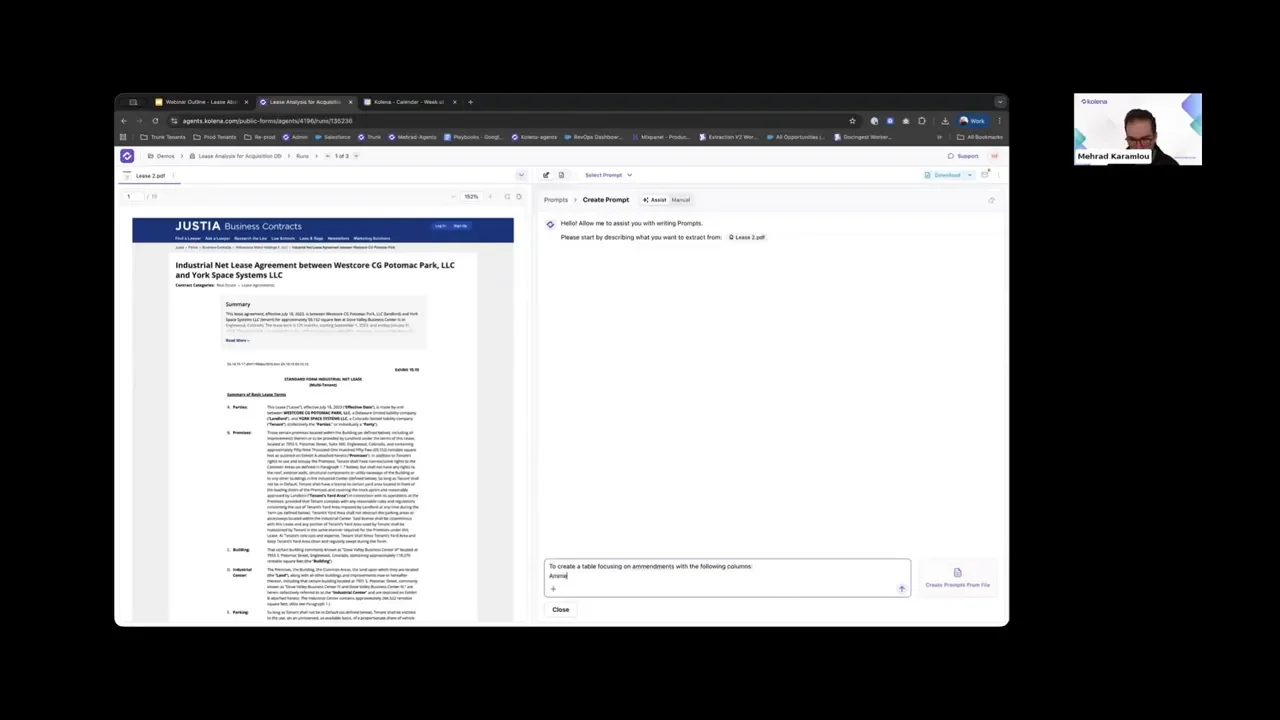
Amendment table — automatically list each amendment, summarize what changed and include the full change text if needed. Iteration is easy: add a column, re-run, and the system updates across all leases.
Rent audit — compare the rent roll against lease language and flag mismatches (security deposits, rent-free periods, etc.).
IRR modeling — extract income and T12 expense data, populate an IRR model and return an underwritten snapshot ready for review.
Learn more in our detail guide for rent roll audits
Quality control and avoiding hallucinations
Accuracy is the primary concern when relying on AI for legal and financial work. The effective approach combines three practices:
Benchmarking models — evaluate candidate models across many document types before deploying them to production.
Consensus validation — request the same data from different models and return results only when they are consistent.
Context limitation — force the agents to use only the provided documents as their knowledge source so they do not invent external facts.
Integrations and handoff
The output needs to plug into existing workflows. Typical integrations include Excel and Word add-ins, automated emails returning the filled templates, and bulk import sheets for lease management systems like Yardi. That means the team that underwrites or manages assets can stay in their familiar tools while benefiting from AI automation.
Real ROI example
Consider a recent acquisition: 60 leases where each lease took roughly four hours to process at $400 per hour when outsourced. Automating that work can approach six figures of savings on a single deal — and that scales across multiple acquisitions.
How to get started
Implementing these agents is a straightforward, staged process:
Map your output templates (Excel, Word, or underwriting models).
Identify priority workflows (lease abstraction, rent audit, IRR modeling, import sheets).
Ingest a representative set of leases and benchmark outputs with your internal reviewers.
Iterate: add new extraction fields, tune clause handling for local regulations or unusual lease types.
Integrate with email intake or Excel add-ins to deliver outputs into your team’s daily tools.
What to expect after adoption
Teams typically see immediate time savings across acquisition due diligence and post-acquisition onboarding. Faster abstracts mean faster underwriting, quicker risk identification, cleaner rent audits and less manual effort to populate lease management systems.
Final takeaway
Lease abstraction no longer needs to be the painful red bump in acquisition timelines. With specialized AI agents that produce verifiable, template-ready outputs, teams can move from documents to decisions in minutes rather than days. The combination of inline citations, reasoning, model consensus and direct integration into Excel and lease platforms reduces risk and accelerates deal velocity — and that directly improves the bottom line.
Next steps
To explore whether this approach fits your workflow, prepare a small set of representative leases and define the template you use today. That set will quickly reveal the potential time savings and the kinds of extractions that matter most for your team.