What Is Property Management Software?
Property management software provides solutions for streamlining rental operations, including tenant screening, automated rent collection, lease management, maintenance tracking, and accounting. Popular solutions include AI-driven workflow automation platforms like Kolena and Leasey.AI and full-stack property management tools like Buildium and AppFolio.
Property management software helps landlords, property managers, and real estate professionals reduce manual work, minimize errors, and enhance the efficiency of property management operations, regardless of the portfolio size.
By centralizing critical data and automating routine tasks, property management software provides clear visibility into property performance and tenant activities. Users can manage multiple properties from a single dashboard, generate financial reports, and maintain compliance with regulatory requirements.
Key Features of Property Management Software
1. Online Rent Collection And Automated Billing
Online rent collection enables tenants to make payments through secure portals using credit cards, ACH transfers, or digital wallets. The system automates reminders, tracks payment status, and provides real-time updates to landlords and tenants, reducing late payments and manual reconciliations. Automated billing ensures that charges such as rent, late fees, and utilities are calculated and invoiced without manual input.
For property managers, this feature integrates with financial systems and generates payment histories. Tenants can view payment schedules, access receipts, and set up recurring payments. Online rent collection and automated billing reduce paperwork and speed up cash flow.
2. Automated Lease And Document Processing
Automated lease and document processing supports drafting, distributing, and managing lease agreements and related documents. Property management software can generate lease templates, auto-fill tenant details, and support compliance with local laws. Documents can be shared electronically, and revision histories are tracked.
This feature also supports digital storage and retrieval, reducing reliance on paper records. Automated reminders for lease renewals or expirations help property managers stay on schedule, and tenants receive timely communication about lease terms.
3. Maintenance Tracking And Management
Maintenance tracking tools allow property managers to receive, prioritize, and resolve maintenance requests. Tenants can submit requests online, including photos or descriptions, which are logged and assigned to vendors or staff. The software provides status updates to relevant parties.
These tools also allow managers to schedule inspections, track maintenance history, and manage vendor relationships from a centralized platform. Automated notifications and reminders help prevent missed appointments or delayed repairs.
4. Communication Tools And Notifications
Property management software includes communication tools for messaging between property managers, tenants, and service providers. These tools support email, SMS, and in-app notifications for announcements, reminders, or alerts. Automated notifications ensure that information, such as upcoming inspections or rent due dates, is delivered to the appropriate recipients.
Communication tools maintain records of interactions for reference in case of disputes. Group messaging features allow managers to send updates to all tenants in a building or community.
5. Financial Reporting And Accounting
Financial reporting and accounting modules provide data on income, expenses, and portfolio performance. The software tracks rent payments, vendor invoices, and other transactions, generating reports for analysis and tax preparation. Integration with accounting platforms reduces duplicate data entry.
These features support bank reconciliation, cash flow monitoring, and budgeting. Property managers can identify trends, flag outstanding payments, and maintain compliance with financial regulations.
6. Lease And E-Signature Support
Lease and e-signature support allows lease agreements to be executed electronically. The software provides legally compliant e-signature capabilities and stores completed documents within the platform with audit trails.
This feature reduces delays in move-ins and renewals. Automated workflows guide users from document preparation to signature collection and distribution.
7. Automated Communication Workflows
Automated communication workflows allow property managers to set triggers and templates for routine messages, such as rent reminders, maintenance updates, or lease renewal notices.
By automating repetitive communication tasks, property management software reduces manual intervention and helps ensure timely messaging. Workflows can be customized for different property types or tenant segments.
Related content: Read our guide to technology for property management
Notable Property Management Software
AI-Driven and Workflow Automation Platforms
1. Kolena

Kolena is an AI automation platform designed to handle document-heavy workflows in real estate operations. It enables property managers, asset managers, and investment teams to automate processes such as lease analysis, contract review, and document-driven reporting using configurable AI agents.
Key features include:
AI document analysis: Extracts and structures information from leases, contracts, invoices, and other real estate documents
Automated workflow agents: Creates AI agents that process documents, validate information, and trigger follow-up actions
Natural-language configuration: Allows users to define extraction tasks and workflows without coding
Data validation and reasoning: Provides explanations and citations for extracted data to support auditability
System integrations: Connects with storage systems, APIs, and real estate platforms to automate document processing pipelines
2. Leasey.AI

Leasey.AI is an AI-powered leasing platform that automates the rental process, from lead capture to lease signing. It uses artificial intelligence to respond to inquiries, qualify leads, schedule showings, and adjust pricing in real time.
Key features include:
AI lead response and qualification: Automatically answers inquiries and qualifies leads across channels 24/7
AI phone agent (Liza): Books showings by phone without human involvement
Instant rent comparisons: Provides real-time comparables for each unit and flags pricing issues
Smart showing scheduler: Organizes routes and timing for property showings
Automated Facebook Marketplace management: Posts listings and responds to leads automatically
3. Convin AI
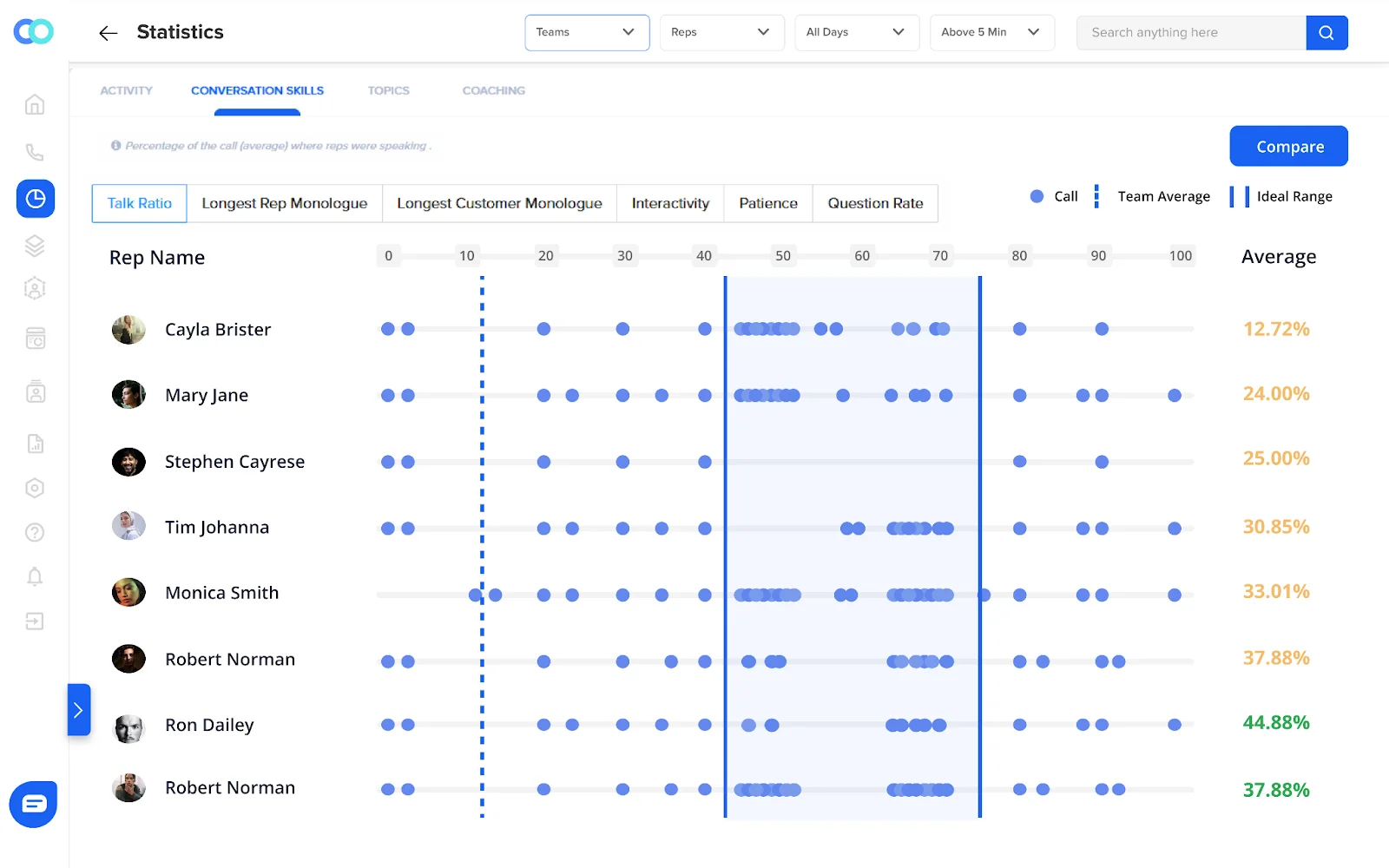
Convin AI is a conversation automation platform for real estate teams to capture, qualify, and convert leads. It automates stages of the sales process, from first contact to site visit confirmation, using AI phone agents, real-time guidance, and call audits.
Key features include:
AI phone call agent: Responds quickly, qualifies leads, books visits, and syncs reminders across WhatsApp, SMS, and email
Real-time assist agent: Monitors live calls, provides prompts, and supports compliance
Conversation intelligence agent: Audits calls to flag risks and identify performance patterns
Automated follow-ups and reminders: Sends multi-channel follow-ups and reminders
CRM integration and note automation: Captures call summaries, consent, and visit outcomes in the CRM or ticketing system
Source: Convin.ai
Related content: Read our guide to property management automation
Full-Stack Property Management Platforms
4. Buildium
Buildium is a property management platform for rent collection, accounting, leasing, and maintenance. It includes automation tools and AI capabilities to support portfolio growth.
Key features include:
AI-powered automation: Automates tasks across accounting, leasing, and operations
Out-of-the-box functionality: Provides guided setup with options for workflow customization
Purpose-built accounting: Includes bank reconciliation, property-specific reporting, and 1099 e-filing
Online rent collection: Enables ACH and credit card payments from residents and vendors
Digital leasing and listings: Supports online applications, tenant screening, and listing syndication
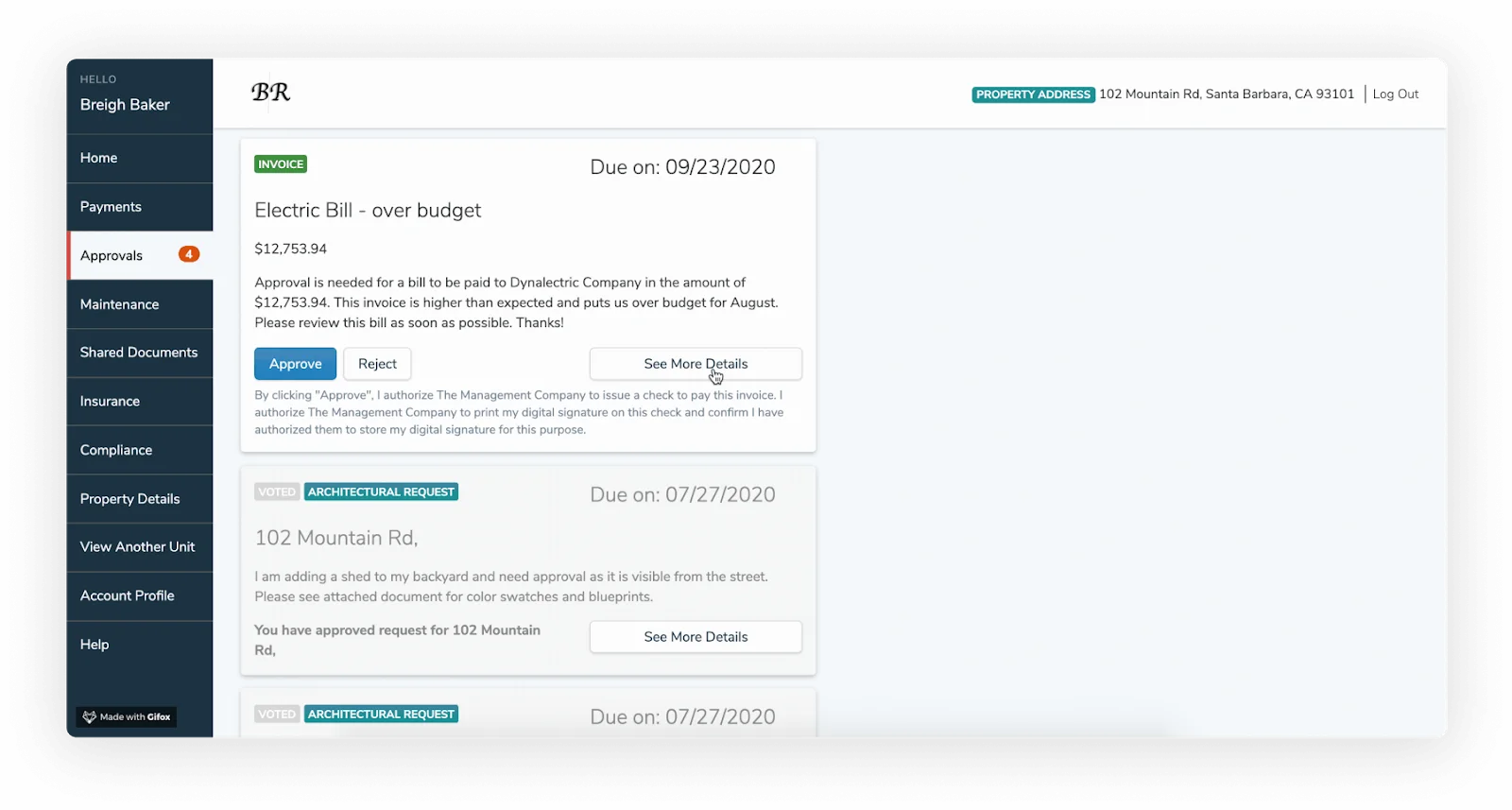
5. AppFolio
AppFolio is a property management platform that combines property and investment operations in one system. It includes built-in AI and a unified data structure to support operational oversight.
Key features include:
Built-in agentic AI: Automates tasks and surfaces operational insights
Unified platform: Connects property management and investment functions with real-time data access
Realm-X workflow automation: Standardizes workflows and reduces errors
Resident and investor services: Provides tools for resident services and investor reporting
Scalable infrastructure: Supports portfolio growth across large unit counts
Source: AppFolio
6. Yardi Breeze
Yardi Breeze is a property management platform for residential portfolios. It provides mobile access, automation tools, and centralized workflows for leasing, maintenance, rent collection, and accounting.
Key features include:
Mobile-friendly management: Provides access to property data and workflows with role-based permissions
Centralized communication: Stores messages, emails, and texts in one system
Online marketing and leasing: Publishes listings, manages applications and screening, and supports digital leases
Automated rent collection: Accepts ACH, credit, debit, and in-person payments via PayNearMe
Accounting tools: Manages payables, receivables, general ledger, escrow accounts, and financial reporting
7. Entrata

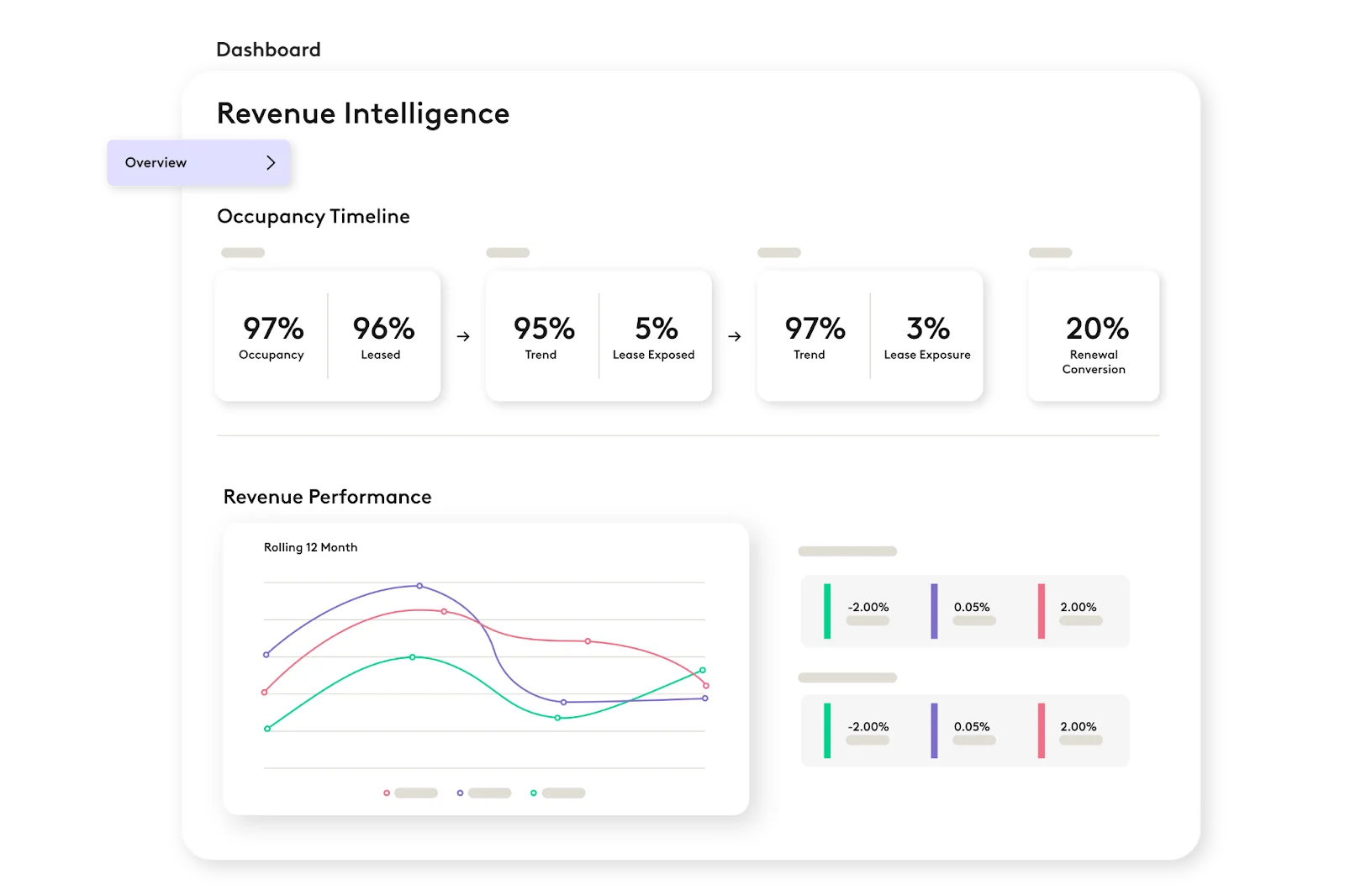
Entrata is a property management operating system that unifies marketing, leasing, maintenance, utilities, and analytics within one platform. It includes automation and AI capabilities across property operations.
Key features include:
Entrata OS: Unifies property and portfolio operations across asset types
Built-in AI and automation: Uses Entrata Layered Intelligence (ELI) to automate tasks related to leasing, communication, and payments
Automated leasing workflows: Integrates screening, insurance, and communication
Resident experience suite: Provides self-service tools, payment options, renters insurance, rewards, and a 24/7 ResidentPortal
Property operations suite: Manages vendor payments, maintenance tracking, compliance workflows, and team collaboration
Source: Entrata
Flexible and SMB-Focused Property Management Solutions
8. DoorLoop

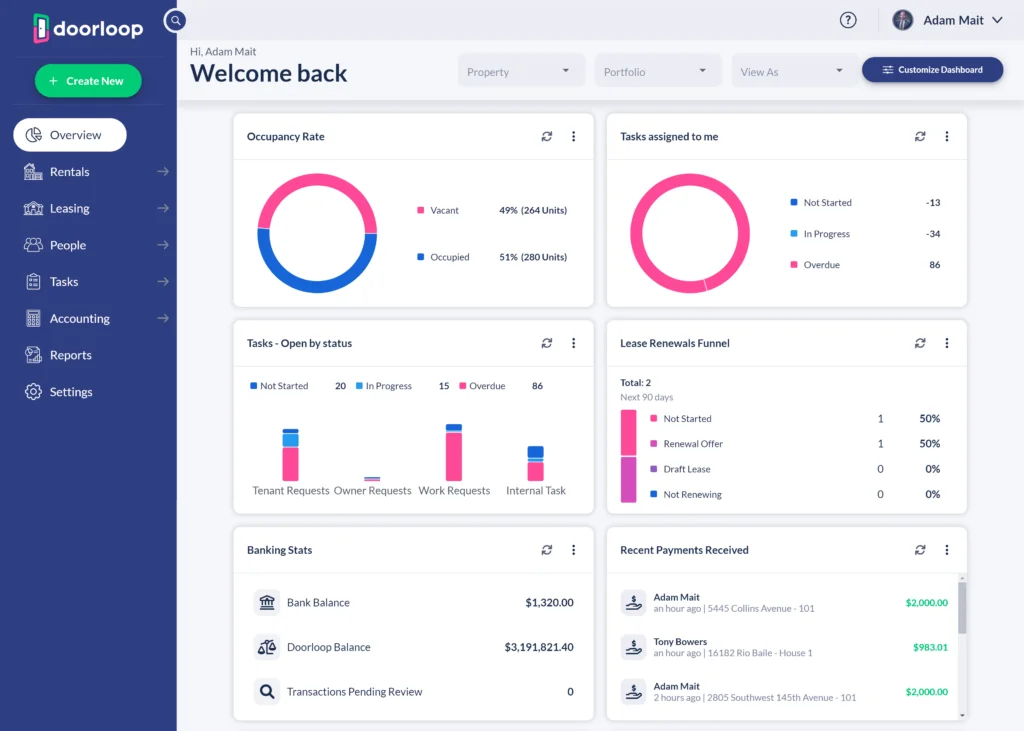
DoorLoop is a property management platform for landlords and property managers managing residential, commercial, affordable housing, or HOA properties. It includes automation tools and accounting features within a single interface.
Key features include:
AI assistant: Automates routine tasks and tenant issue handling
AI-powered inspections: Supports on-site inspections and report generation
Custom workflows: Automates tasks using configurable templates
Online rent collection: Accepts credit card, ACH, cash, or check payments with automated reminders
Built-in accounting tools: Provides reporting, customizable chart of accounts, bank syncing, and QuickBooks integration
Source: Doorloop
9. TenantCloud
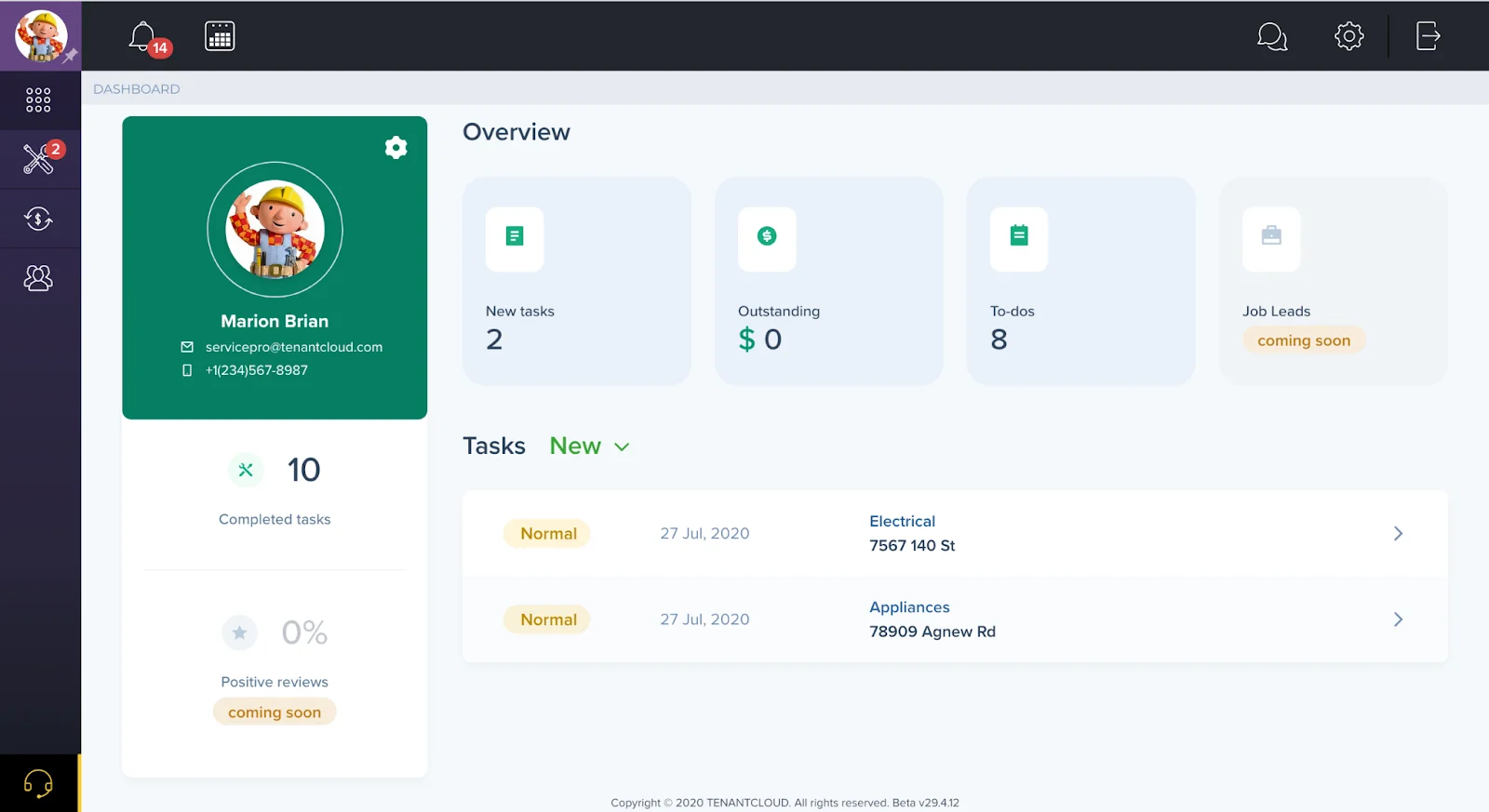
TenantCloud is a property management platform for landlords and property managers. It centralizes rent collection, accounting, tenant screening, and listing syndication in one system.
Key features include:
Online rent collection: Accepts credit, debit, ACH, cash, or check payments with autopay and invoice tracking
Built-in accounting tools: Automates invoicing, tracks cash flow, generates reports, and integrates with QuickBooks and bank accounts
Tenant screening: Provides background and credit checks, pre-screening tools, and screening packages
Listing syndication: Publishes listings to rental sites such as Apartments.com and Realtor.com and includes a customizable website
Owner portal: Provides property owners access to reports and updates
Source: Tenant Cloud
10. Condo Control Central
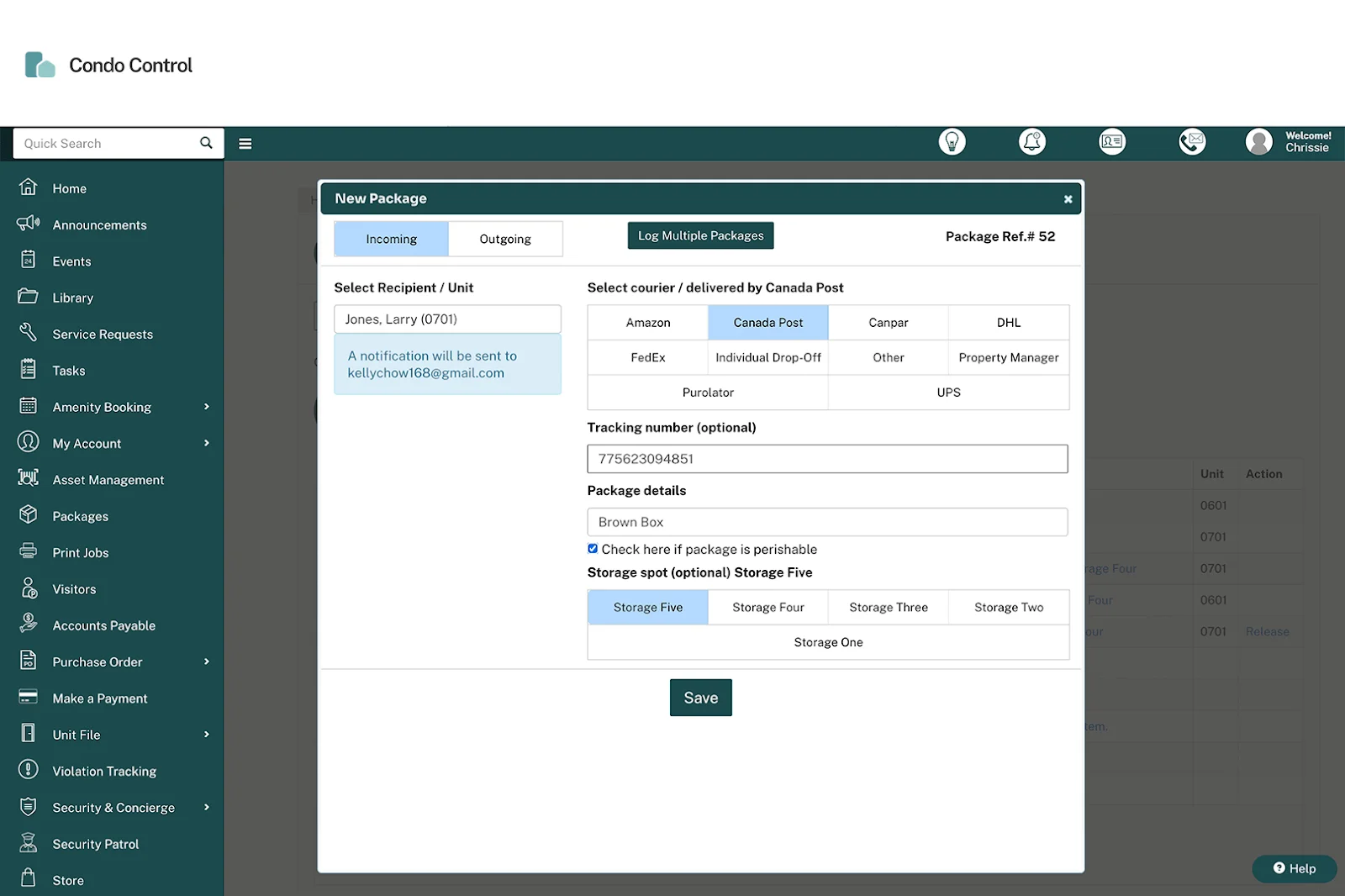
Condo Control Central is a management platform for condos and HOAs to centralize operations, automate resident support, and maintain records. It combines resident self-service tools, workflow standardization, and accounting integrations.
Key features include:
AI-powered resident self-service: Resolves common questions through an AI assistant and knowledge base
Managed resident support: Provides phone, email, and chat support
Standardized workflow automation: Uses templates, roles, and permissions to standardize operations
Portfolio and multi-property dashboards: Provides cross-community controls and reporting
Work orders and preventive maintenance: Tracks maintenance, vendors, insurance, and service history
Source: Condo Control
Related content: Read our guide to AI for property management
Evaluating and Selecting the Right Property Management Software
Choosing property management software depends on operational needs, portfolio size, and required automation. A one-size-fits-all solution rarely works. Features suitable for a small landlord may not meet the needs of a large operator managing thousands of units.
Below are key factors to consider:
Portfolio size and property type support: nsure the platform supports your portfolio size and property types, such as residential, commercial, HOA, or mixed-use.
Core feature set: Confirm that features such as rent collection, lease management, maintenance tracking, accounting, and communication tools are included and integrated.
Ease of use and onboarding: Review interface design, role-based dashboards, and setup processes.
Automation and AI capabilities: Assess automation for tasks such as rent reminders, lead responses, and maintenance scheduling.
Mobile and remote access: Verify mobile access for property managers and tenants.
Integration with accounting and CRM tools: Check integration with systems such as QuickBooks and CRM platforms.
Customization and scalability: Select software that supports workflow customization and portfolio growth.
Customer support and training resources: Evaluate support availability and training materials.
Security and compliance: Confirm secure data practices, role-based access, and support for regulatory compliance.
Total cost of ownership: Compare pricing models, implementation costs, and additional fees.
Conclusion
Property management software centralizes leasing, maintenance, accounting, and communication into a unified system. The right solution depends on portfolio size, asset type, and required automation depth. AI-driven tools focus on leasing and workflow efficiency, while full-stack platforms support end-to-end property operations. Evaluating feature coverage, integrations, scalability, and total cost helps ensure the software aligns with both current needs and long-term growth plans.