AI lets CRE investment teams review acquisition data rooms in days instead of weeks by ingesting hundreds of PDFs at once, cross-referencing them, flagging assumption mismatches and missing items, and producing a structured diligence summary with every figure cited to its source document. Because data-room review is the bottleneck between LOI and close, compressing it directly increases deal velocity — and lets teams bid more competitively without cutting corners.
This is for CRE investment managers, PE firms with real estate exposure, private lenders, and acquisitions teams at owner-operators and REITs.
Why the Data Room Is the Deal-Velocity Bottleneck
Between LOI and close, the acquisitions team has to read everything: historical leases and amendments, prior appraisals, environmental reports, financial statements, rent rolls, and entity documents — often hundreds of PDFs — on a fixed 30–45 day clock. The reading is what dictates how fast you can get to a confident bid and a clean close. Do it manually and a large portfolio swamps the window; on a 100-lease book, lease abstraction alone is roughly 400 analyst-hours before anyone touches the appraisals or environmental reports. Against competing bidders who move faster, slow diligence loses deals.
Analyze your first offering memo in minutes with AI
What Diligence Costs Today
Third-party diligence isn't cheap either. For a commercial acquisition, environmental assessments, title work, zoning review, lease audits, and structural inspections commonly run $10,000–$100,000+ depending on size and complexity, on top of legal hours and the acquisition fee (typically 1–2% of the deal). Much of that spend buys outside expertise you can't automate — but a large share of the internal cost is simply people reading documents, which is exactly what AI compresses.
How AI Reviews a Data Room
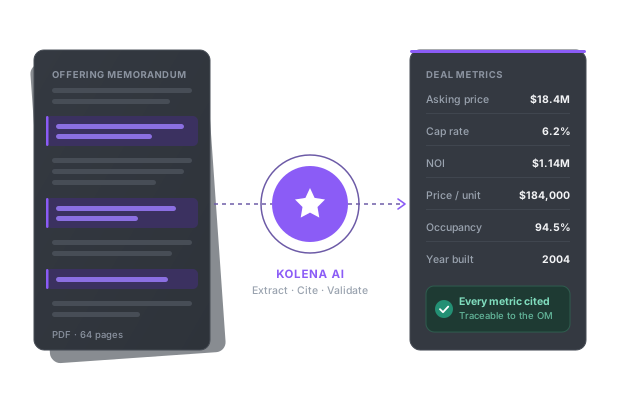
AI ingests the full data room and works across documents rather than one at a time. It cross-references — reconciling the rent roll against the leases, the financial statements against the appraisal assumptions — flags mismatches and missing items (an absent estoppel, an unsigned amendment, a figure that doesn't tie), and produces a structured diligence summary. Every figure in that summary is cited to its source document, so an analyst verifies rather than re-derives, and the IC sees sourced numbers.
| Factor | Manual data-room review | AI-assisted review |
|---|---|---|
| Calendar time | 2–3 weeks on a large portfolio | Days |
| Cross-referencing | Document-by-document, late in the process | Across the full set, up front |
| Missing-item detection | Depends on reviewer diligence | Flagged systematically |
| IC memo sourcing | Conclusions, figures re-derived later | Every figure cited to its source |
| Data residency | Varies | Onshore, SOC 2 Type II, no training on your data |
The outcome is faster close timelines, better-sourced IC memos, and less post-close surprise risk. One PE customer uses Kolena for IC memo drafting and data-room due diligence, reducing manual effort and improving consistency across reports.
Who Should Adopt This — and Who Shouldn't
Adopt it when you're acquiring at portfolio scale, when deal timelines are competitive, or when IC presentations demand sourced figures. A buyer doing one small, simple deal a year with a tiny document set may not need it. And AI doesn't replace specialist third parties — the environmental engineer and the appraiser still do their work; AI reads and structures the documents around them so your team moves faster and the investment judgment stays with the deal team.
Learn more about real estate investing.
How Kolena Works
Kolena is an AI document automation platform built for CRE investment and acquisitions teams. The full data room — historical leases, prior appraisals, environmental reports, financial statements, entity documents — goes in; a structured diligence summary with flagged mismatches, missing items, and a sourced IC-memo draft comes out in days.
It reads any format inside your secure environment and pushes structured output into your acquisitions model and reporting stack, with every figure cited to the source document so the IC reviews sourced numbers. Every run produces a full audit trail: not just what was extracted, but the specific clause, line, or figure that justified each data point. SOC 2 Type II certified, onshore processing, no training on customer data.